Learn about Cash Out Refinance rates today in 2026, eligibility requirements, closing costs, benefits, risks, and how to qualify for the best mortgage terms.
Cash Out Refinance 2026: Rates, Requirements and Complete Guide
Buying a home is a major financial step, but your home can also become a valuable financial resource over time. If your property has gained value and you have built enough equity, a Cash Out Refinance may help you access money for important expenses. Many homeowners use this option to pay for home improvements, consolidate debt, cover education costs, or manage other large expenses.
In this guide, you will learn how Cash Out Refinance works in 2026, current rate trends, eligibility requirements, advantages, risks, and tips for getting the best deal.
What Is a Cash Out Refinance?
A Cash Out Refinance replaces your existing mortgage with a new loan that is larger than the amount you currently owe. The difference between the new loan balance and your remaining mortgage is paid to you in cash.
You continue making monthly mortgage payments, but now your loan reflects the larger amount you borrowed.
For example:
- Current home value: $500,000
- Mortgage balance: $250,000
- New refinance loan: $325,000
You receive approximately $75,000 in cash after paying off your existing mortgage and closing costs.
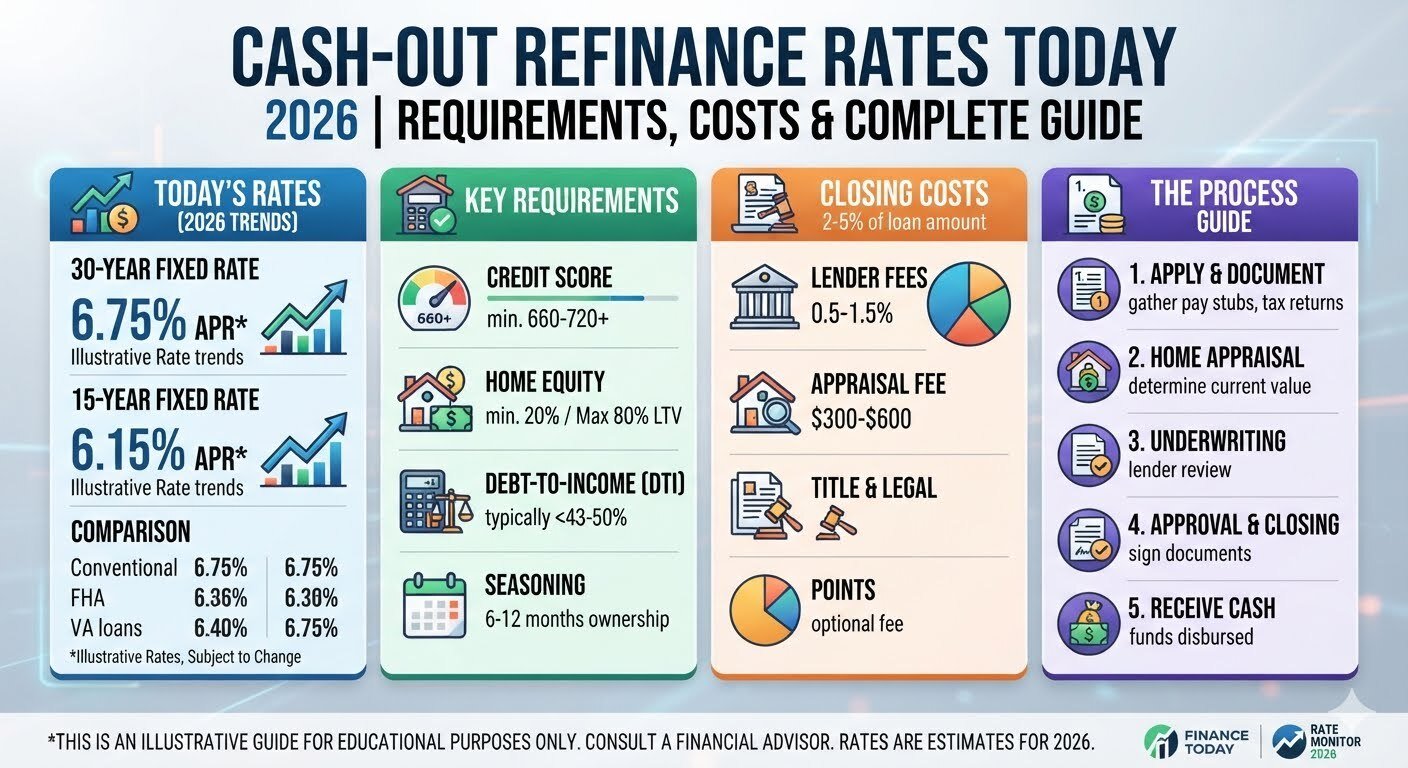
Cash Out Refinance Rates Today in 2026
Mortgage rates continue to change based on economic conditions, inflation, and Federal Reserve policy.
Your Cash Out Refinance rate depends on several factors, including:
- Credit score
- Home equity
- Loan amount
- Debt to income ratio
- Property type
- Loan term
- Market conditions
Borrowers with stronger financial profiles generally qualify for lower interest rates and better loan terms.
Cash Out Refinance Requirements in 2026
Most lenders have several qualification requirements before approving a Cash Out Refinance.
Sufficient Home Equity
Most lenders require homeowners to keep at least 20 percent equity after refinancing.
Good Credit Score
Although some lenders approve lower credit scores, higher scores usually qualify for better interest rates.
Stable Income
Lenders verify your income to ensure you can comfortably repay the new mortgage.
Acceptable Debt to Income Ratio
Keeping your monthly debt obligations within lender guidelines improves your approval chances.
Home Appraisal
Most Cash Out Refinance loans require a professional home appraisal to determine your property’s current market value.
How Does Cash Out Refinance Work?
The process is similar to applying for a new mortgage.
Typical steps include:
- Compare lenders.
- Submit your application.
- Provide income and financial documents.
- Complete a home appraisal.
- Receive loan approval.
- Sign closing documents.
- Receive your cash after closing.
Many borrowers receive their funds within several business days after closing.
Benefits of Cash Out Refinance
A Cash Out Refinance offers several advantages for qualified homeowners.
Access Home Equity
You can convert part of your home equity into cash without selling your property.
Lower Interest Than Many Personal Loans
Mortgage interest rates are often lower than credit cards and unsecured personal loans.
One Monthly Payment
Instead of managing several debts, many homeowners combine them into one mortgage payment.
Fund Home Improvements
Many borrowers use the money to renovate kitchens, bathrooms, or add living space, which may increase property value.
Pay Major Expenses
Cash Out Refinance funds may help cover education expenses, medical bills, or business investments.
Potential Risks
Although refinancing offers many benefits, it also comes with important considerations.
- Your mortgage balance increases.
- Monthly payments may rise.
- Closing costs apply.
- Your repayment period may become longer.
- Your home serves as collateral.
Borrow only what you truly need and ensure the refinance supports your long term financial goals.
Closing Costs
Cash Out Refinance loans generally include closing costs such as:
- Loan origination fees
- Appraisal fees
- Title insurance
- Credit report fees
- Recording fees
- Attorney fees where applicable
Many lenders allow some closing costs to be included in the new loan amount.
Is Cash Out Refinance Better Than a Home Equity Loan?
Both options allow you to borrow against your home’s equity, but they work differently.
| Cash Out Refinance | Home Equity Loan |
|---|---|
| Replaces current mortgage | Keeps existing mortgage |
| One monthly payment | Two monthly payments |
| New mortgage interest rate | Separate loan interest rate |
| Good for replacing existing mortgage | Good if current mortgage rate is already low |
The better choice depends on your financial goals and current mortgage rate.
Tips to Get the Best Cash Out Refinance Rate
You can improve your chances of receiving better loan terms by following these steps:
- Improve your credit score.
- Reduce existing debt.
- Increase your home equity.
- Compare offers from multiple lenders.
- Verify all loan fees before closing.
- Maintain stable employment and income.
Shopping around can save thousands of dollars over the life of your mortgage.
Is Cash Out Refinance Right for You?
A Cash Out Refinance may be a smart financial decision if you want to:
- Renovate your home
- Consolidate expensive debt
- Pay education expenses
- Cover emergency costs
- Finance major purchases
However, it may not be the right solution if you plan to sell your home soon or if refinancing significantly increases your monthly payment.
Always compare loan offers and carefully review the total borrowing cost before making your decision.
Conclusion
A Cash Out Refinance in 2026 gives homeowners an opportunity to unlock home equity while replacing their existing mortgage with a new loan. When used responsibly, it can provide affordable financing for renovations, debt consolidation, education, or other important financial goals.
Before applying, compare lenders, understand all fees, review current mortgage rates, and calculate your monthly payment carefully. Choosing the right refinance option can help you make the most of your home’s value while supporting your long term financial plans.
Frequently Asked Questions
What is a Cash Out Refinance?
It replaces your current mortgage with a larger loan and gives you the difference in cash.
How much cash can I receive?
The amount depends on your home’s value, remaining mortgage balance, lender guidelines, and available home equity.
Do I need good credit?
Higher credit scores generally qualify for better interest rates, but some lenders accept lower scores.
Can I use the money for any purpose?
Yes. Many homeowners use the funds for home improvements, debt consolidation, education, medical expenses, or other financial needs.
Does Cash Out Refinance require a home appraisal?
Yes. Most lenders require a professional appraisal to determine your home’s current market value.
Are there closing costs?
Yes. Closing costs typically include lender fees, appraisal fees, title services, and recording fees.
Is Cash Out Refinance better than a home equity loan?
It depends on your current mortgage rate, financial goals, and whether replacing your existing mortgage makes financial sense.
How long does the process take?
Most Cash Out Refinance loans close within several weeks, although the timeline varies by lender and documentation requirements.