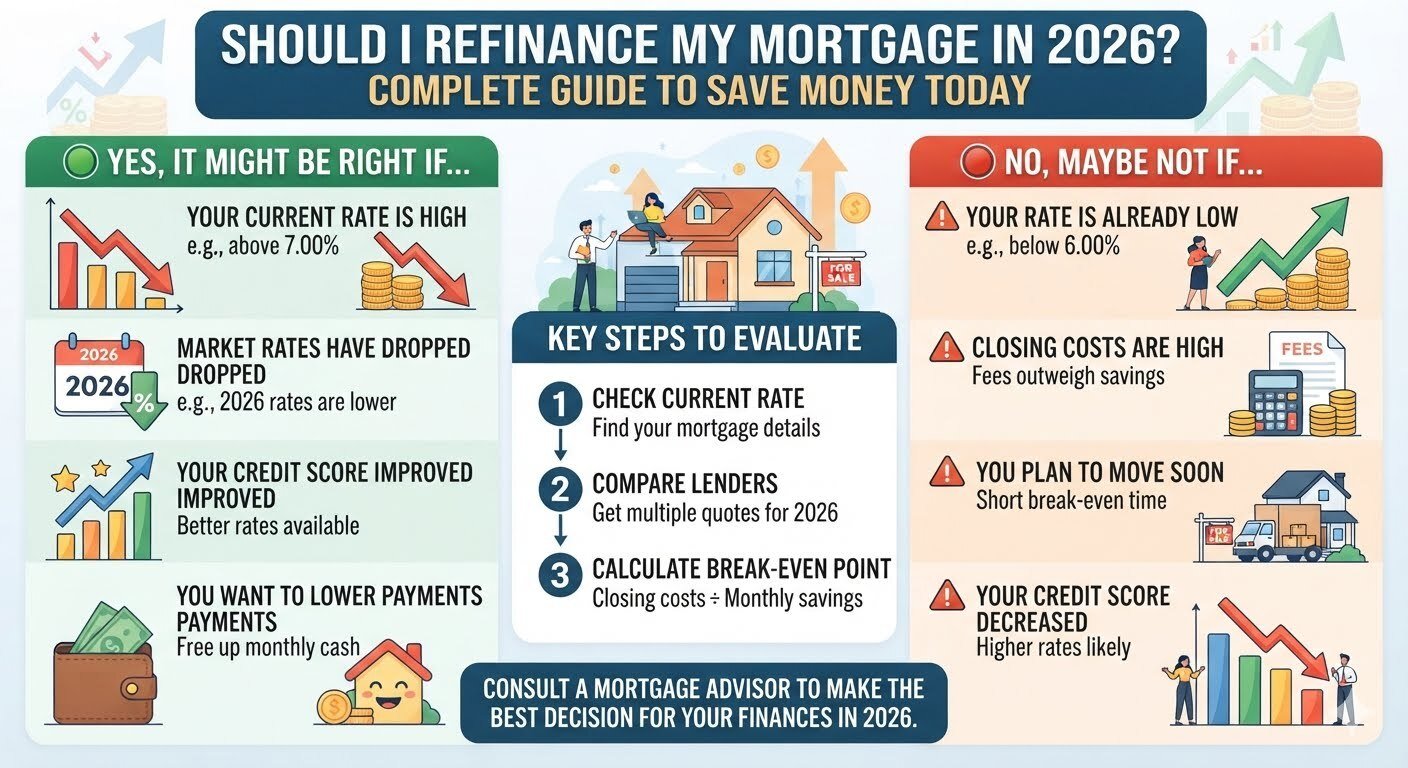
Should I refinance my mortgage in 2026? Learn when refinancing makes sense, current trends, costs, savings, and how to choose the best loan for your goals.
Should I Refinance My Mortgage in 2026? Complete Guide
If you are asking, should I refinance my mortgage in 2026, you are not alone. Many homeowners are looking for ways to lower their monthly payments, reduce interest costs, or access home equity. Mortgage rates have changed over the past few years, making refinancing an important option for many borrowers.
The right decision depends on your financial goals, current mortgage rate, credit score, home equity, and how long you plan to stay in your home. This guide explains everything you need to know before refinancing in 2026.
What Does Mortgage Refinancing Mean?

Mortgage refinancing means replacing your current home loan with a new one. The new mortgage pays off your existing loan, and you begin making payments on the new loan.
Many homeowners refinance to:
- Lower their interest rate
- Reduce monthly mortgage payments
- Change the loan term
- Switch from an adjustable rate mortgage to a fixed rate mortgage
- Access home equity with a cash out refinance
- Remove private mortgage insurance
Choosing the right refinance depends on your financial situation and future plans.
Why Homeowners Are Refinancing in 2026
Several factors are encouraging homeowners to refinance this year.
Lower Interest Rates
If current mortgage rates are lower than your existing rate, refinancing may reduce your monthly payment and save money over the life of the loan.
Better Credit Score
Many homeowners have improved their credit scores since purchasing their homes. A stronger credit profile can qualify you for better refinance rates.
More Home Equity
Home values have increased in many areas, giving homeowners additional equity. More equity often means better loan options and lower borrowing costs.
Lower Monthly Payments
Reducing monthly expenses can improve your household budget and increase financial flexibility.
When Does Refinancing Make Sense?
Refinancing is not the right choice for everyone.
You may benefit if you:
- Can secure a lower interest rate
- Plan to stay in your home for several more years
- Want to shorten your loan term
- Need predictable monthly payments
- Want to consolidate higher interest debt through a cash out refinance
- Have built enough home equity
If these goals match your needs, refinancing could provide long term financial benefits.
When Refinancing May Not Be Worth It
There are situations where refinancing may not save money.
Consider waiting if:
- Closing costs exceed your expected savings
- You plan to move soon
- Your current interest rate is already very competitive
- Your credit score has declined
- You have very little home equity
Always compare the total cost of the new loan before making a decision.
Types of Mortgage Refinance Loans
Rate and Term Refinance
This is the most common refinance option. It changes your interest rate, loan term, or both without taking cash from your home equity.
Cash Out Refinance
A cash out refinance allows you to borrow against your home’s equity and receive cash at closing.
Many homeowners use the funds for:
- Home improvements
- Debt consolidation
- Education expenses
- Emergency savings
Cash In Refinance
With this option, you pay money toward your mortgage balance during refinancing. This may help you qualify for a lower interest rate.
Fixed Rate Refinance
A fixed rate mortgage offers stable monthly payments because the interest rate remains the same throughout the loan.
Adjustable Rate Refinance
An adjustable rate mortgage may begin with a lower interest rate, but the rate can change over time.
Costs to Consider Before Refinancing
Refinancing is not free. Typical costs include:
- Loan origination fees
- Appraisal fees
- Title services
- Credit report fees
- Recording fees
- Closing costs
Before refinancing, calculate your break even point. This tells you how long it will take for your monthly savings to cover the refinance costs.
How to Know If Refinancing Will Save You Money
Ask yourself these questions:
Is my new interest rate lower?
Even a modest reduction may save thousands over the life of the loan.
How long will I stay in my home?
The longer you remain in the property, the more likely you are to recover your closing costs.
Can I afford the new loan?
Review your monthly budget and make sure the new payment fits comfortably.
What are my long term goals?
Some homeowners want lower monthly payments, while others want to pay off their mortgage faster.
Steps to Refinance Your Mortgage
Check Your Credit Score
A higher credit score usually qualifies for lower mortgage rates.
Review Your Home Equity
Lenders often prefer borrowers with sufficient equity.
Compare Multiple Lenders
Request quotes from several mortgage lenders to find the best refinance rates.
Gather Your Documents
Prepare income verification, tax returns, bank statements, and employment information.
Lock Your Interest Rate
If you receive a competitive rate, consider locking it before market conditions change.
Benefits of Refinancing
Refinancing can provide several advantages.
- Lower monthly payments
- Lower interest costs
- Faster mortgage payoff
- Stable fixed interest rate
- Access to home equity
- Better financial flexibility
Possible Drawbacks
There are also disadvantages to consider.
- Closing costs
- Extended loan repayment period
- Possible increase in total interest if the loan term resets
- Qualification requirements
Carefully compare both the benefits and costs before moving forward.
Tips for Getting the Best Mortgage Refinance Rate
Follow these strategies to improve your chances of receiving a competitive rate.
- Improve your credit score
- Pay down existing debt
- Increase your home equity
- Compare several lenders
- Maintain stable employment
- Provide complete financial documentation
These steps may help you qualify for better refinance terms.
Conclusion
If you are wondering should I refinance my mortgage in 2026, the answer depends on your personal financial goals. Refinancing can lower monthly payments, reduce interest costs, shorten your loan term, or provide access to your home’s equity. However, it is important to compare interest rates, closing costs, and your long term plans before making a decision.
Take time to review multiple loan offers, calculate your potential savings, and choose the option that supports your financial future. A carefully planned refinance can be one of the smartest financial moves for many homeowners in 2026.
Frequently Asked Questions
Should I refinance my mortgage in 2026?
If refinancing lowers your interest rate, reduces your monthly payment, or helps you achieve your financial goals, it may be a good decision.
How much does mortgage refinancing cost?
Closing costs generally range from two percent to five percent of the loan amount, depending on the lender and location.
What credit score is needed to refinance?
Many lenders prefer a credit score of at least 620, although higher scores often qualify for better interest rates.
Can I refinance if I have little home equity?
Some refinance programs allow lower equity, but having more equity usually provides better loan options.
Is cash out refinancing a good idea?
It can be useful for home improvements or consolidating higher interest debt, but you should understand the risks of borrowing against your home.
How long does mortgage refinancing take?
Most refinance loans close within thirty to forty five days, although timing varies by lender.
Will refinancing lower my monthly payment?
It can if you qualify for a lower interest rate or choose a longer repayment term.