Compare FHA Loan vs Conventional Loan in 2026. Learn about credit score, down payment, mortgage insurance, rates, and choose the best home loan for your needs.
FHA Loan vs Conventional Loan 2026: Which Is Better?
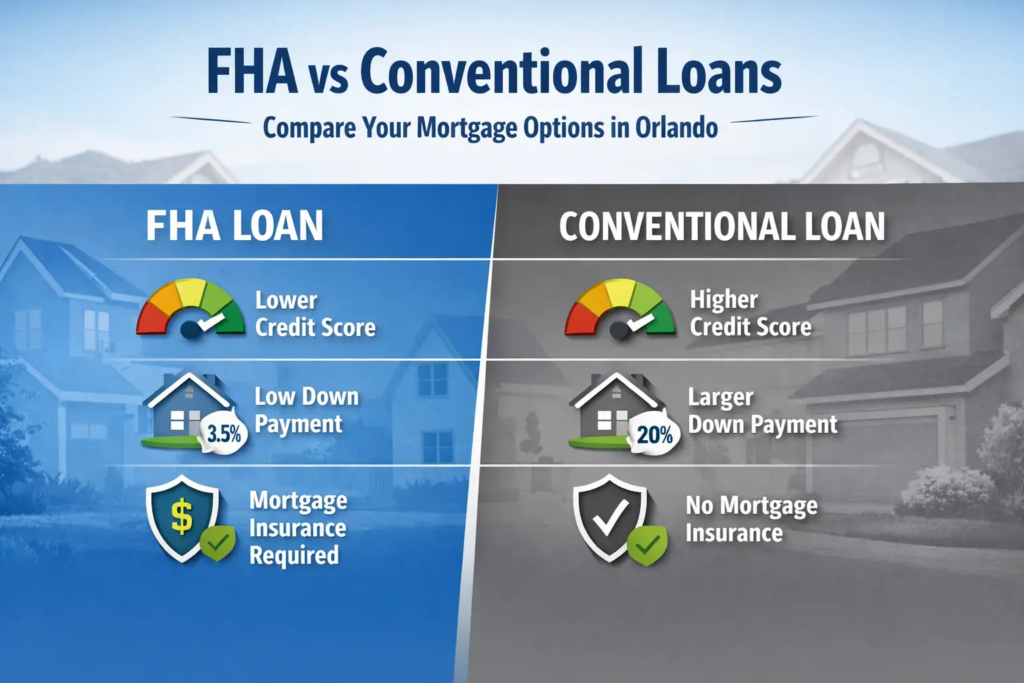
Buying a home is one of the biggest financial decisions you will ever make. Choosing the right mortgage can save you thousands of dollars over the life of your loan. Two of the most popular mortgage options are FHA loans and conventional loans.
So, which one is better in 2026?
The answer depends on your credit score, down payment, income, and long term financial goals. Some buyers benefit from the flexible requirements of an FHA loan, while others save more money with a conventional loan.
This guide explains the key differences between FHA and conventional loans, helping you make the right decision with confidence.
What Is an FHA Loan?
An FHA loan is a mortgage insured by the Federal Housing Administration. It is designed to help buyers who have lower credit scores or limited savings for a down payment.
Many first home buyers choose FHA loans because qualifying is often easier than with other mortgage programs.
Benefits of an FHA Loan
- Lower credit score requirements
- Smaller down payment
- Flexible income guidelines
- Higher approval rates for many buyers
- Great option for first time home buyers
What Is a Conventional Loan?
A conventional loan is a mortgage that is not insured by the government. These loans follow lending standards established by Fannie Mae and Freddie Mac.
Conventional loans usually reward borrowers who have strong credit and stable finances.
Benefits of a Conventional Loan
- Lower long term borrowing costs
- More property choices
- No permanent mortgage insurance
- Competitive interest rates for qualified borrowers
- Flexible loan terms
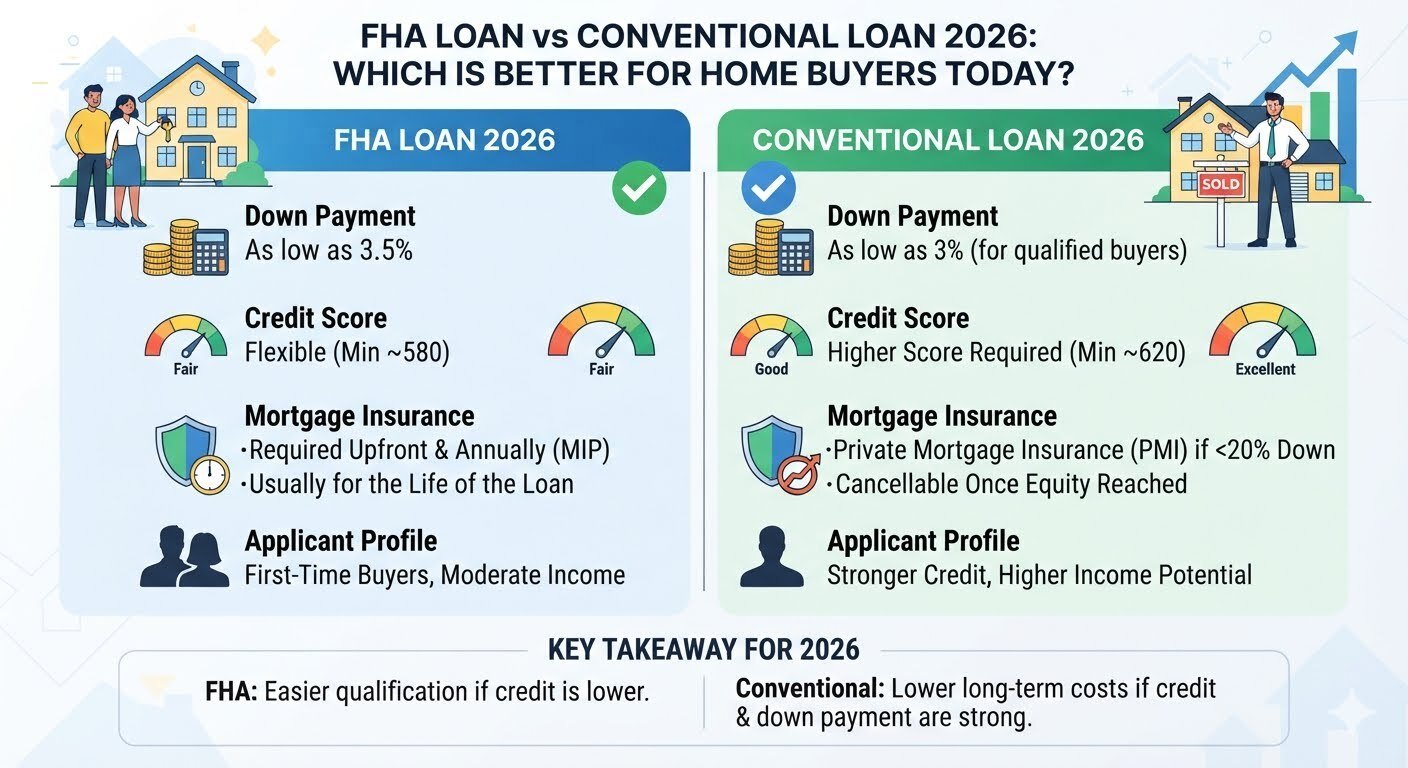
FHA Loan vs Conventional Loan 2026 Comparison
| Feature | FHA Loan | Conventional Loan |
|---|---|---|
| Minimum credit score | Usually 580 | Usually 620 or higher |
| Down payment | As low as 3.5 percent | As low as 3 percent |
| Mortgage insurance | Required | May be removed later |
| Government backed | Yes | No |
| Property standards | More strict | More flexible |
| Best for | Lower credit buyers | Higher credit buyers |
Credit Score Requirements
Your credit score plays a major role in choosing the right mortgage.
An FHA loan is often the better choice if your credit score needs improvement. Borrowers with lower scores may still qualify if they meet lender requirements.
A conventional loan generally requires stronger credit. Higher scores often qualify for lower interest rates and lower monthly payments.
If your credit score is above 700, a conventional loan may provide better long term savings.
Down Payment Comparison
Saving for a home can take years, which makes down payment requirements important.
An FHA loan typically requires only 3.5 percent down for qualified borrowers.
A conventional loan may require as little as 3 percent for some buyers, although larger down payments can reduce borrowing costs.
If you can afford a larger down payment, a conventional mortgage often becomes more attractive.
Mortgage Insurance Differences
Mortgage insurance is one of the biggest differences between these loan programs.
With an FHA loan, borrowers pay both an upfront mortgage insurance premium and monthly mortgage insurance.
In many cases, FHA mortgage insurance lasts much longer than conventional mortgage insurance.
With a conventional loan, private mortgage insurance is generally required when the down payment is less than 20 percent. Once enough home equity is built, the insurance can often be removed.
For many homeowners, this can result in significant long term savings.
Interest Rates in 2026
Many buyers assume FHA loans always have lower interest rates.
While FHA loans often offer competitive rates, the total loan cost includes mortgage insurance.
Conventional loans may have slightly higher rates for some borrowers, but lower insurance costs can make them less expensive overall.
Always compare the annual cost of each loan instead of looking only at the interest rate.
Which Loan Is Easier to Qualify For?
An FHA loan is generally easier to qualify for because it offers more flexible guidelines.
It may be a better choice if you have:
- Lower credit score
- Smaller down payment
- Limited credit history
- Higher debt compared with income
A conventional loan may be the better option if you have:
- Excellent credit
- Stable income
- Larger down payment
- Strong financial history
Which Loan Saves More Money?
The answer depends on your financial situation.
An FHA loan may help you become a homeowner sooner, especially if saving a large down payment is difficult.
A conventional loan often costs less over many years because mortgage insurance can eventually be removed and borrowers with higher credit usually receive better loan pricing.
Before making a decision, compare monthly payments, closing costs, insurance costs, and total interest over the life of the loan.
Who Should Choose an FHA Loan?
An FHA loan may be the right choice if you:
- Have a lower credit score
- Need a smaller down payment
- Are buying your first home
- Want easier qualification requirements
- Have limited savings
Who Should Choose a Conventional Loan?
A conventional loan may be the better option if you:
- Have excellent credit
- Can make a larger down payment
- Want lower long term borrowing costs
- Plan to build home equity quickly
- Want mortgage insurance removed in the future
Final Thoughts
When comparing FHA Loan vs Conventional Loan 2026, there is no single answer that works for everyone.
If qualifying is your biggest challenge, an FHA loan can make homeownership possible with more flexible requirements.
If you have stronger credit and more savings, a conventional loan may reduce your total borrowing costs over time.
The smartest approach is to compare loan estimates from several lenders, review all costs carefully, and choose the mortgage that fits both your current budget and your future financial goals.
Frequently Asked Questions
1. Is an FHA loan better than a conventional loan?
An FHA loan is often better for buyers with lower credit scores or smaller down payments, while a conventional loan is usually better for buyers with stronger financial profiles.
2. Which loan has lower monthly payments?
It depends on your credit score, interest rate, mortgage insurance, and loan amount. Compare complete loan estimates before deciding.
3. Can I switch from an FHA loan to a conventional loan?
Yes. Many homeowners refinance into a conventional loan after building enough home equity.
4. Which loan is best for first home buyers?
Many first home buyers choose FHA loans because they have more flexible qualification requirements.
5. Do conventional loans always require a large down payment?
No. Some conventional loan programs allow qualified buyers to purchase a home with as little as 3 percent down.
6. Which loan has easier approval requirements?
FHA loans generally have more flexible credit and income guidelines than conventional loans.
7. Can mortgage insurance be removed?
Private mortgage insurance on many conventional loans can usually be removed after enough home equity is built. FHA mortgage insurance often remains longer depending on the loan terms.
8. Which loan should I choose in 2026?
Choose an FHA loan if you need flexible qualification requirements. Choose a conventional loan if you have strong credit and want lower long term costs.