Buying a home is one of the biggest financial decisions most people make, and Mortgage Interest Rates Explained is the first step toward understanding how much your home loan will actually cost. A mortgage rate determines the extra amount you pay to borrow money from a lender, affecting your monthly payment and the total cost of your home over time.
In simple terms, a mortgage interest rate is the percentage a lender charges you for using their money to purchase a property. A lower rate can save thousands of dollars throughout a loan, while even a small increase can significantly change your monthly budget.
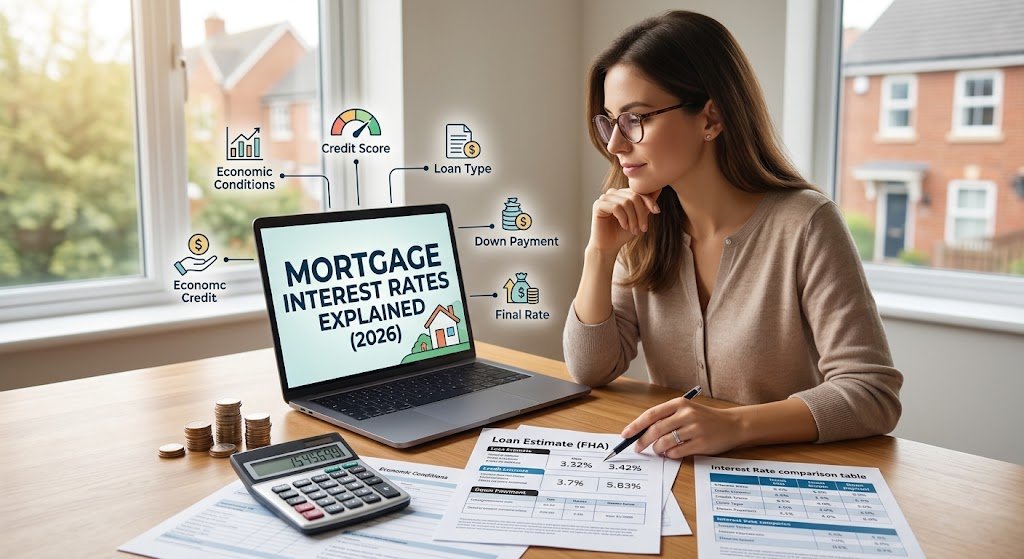
Mortgage interest rates are influenced by several factors, including economic conditions, inflation, credit score, loan type, down payment, and market demand. Understanding these factors helps buyers make smarter decisions instead of accepting the first loan offer they receive.
This guide explains how mortgage rates work, why they change, what affects your personal rate, and how you can improve your chances of getting better financing terms.

What Are Mortgage Interest Rates and How Do They Work?
A mortgage interest rate is the cost you pay for borrowing money from a lender to buy a home. Instead of lending money for free, banks and mortgage companies charge interest as compensation for providing the loan.
For example, if you borrow $300,000 with a fixed mortgage rate of 6%, you do not only repay the original $300,000. You also pay interest over the loan term according to the agreed rate.
Your monthly mortgage payment usually includes:
- Principal (the amount borrowed)
- Interest (the lender’s charge)
- Property taxes
- Homeowners insurance
- Mortgage insurance (if required)
The interest portion is usually higher during the early years of a mortgage because your loan balance is still large. As you continue making payments, more money goes toward reducing the principal.
Mortgage Payment Calculator Guide
How Mortgage Interest Rates Are Determined
Mortgage rates are not random numbers. Lenders evaluate multiple factors before deciding what interest rate they will offer.
Economic Conditions
The overall economy has a major impact on mortgage interest rates. When inflation rises, lenders often increase rates because borrowing money becomes more expensive.
The Federal Reserve also influences mortgage markets indirectly through monetary policy decisions. Although the Fed does not directly set mortgage rates, changes in federal interest rates can affect borrowing costs across the economy.
According to the Federal Reserve official website, monetary policy decisions influence broader financial conditions that affect consumer borrowing.
Your Credit Score
Your credit score tells lenders how likely you are to repay your loan. Borrowers with higher credit scores generally receive better mortgage offers because they represent lower risk.
A borrower with excellent credit may qualify for a lower rate compared with someone who has missed payments or carries high debt.
Common credit factors lenders review include:
- Payment history
- Credit utilization
- Length of credit history
- Existing debts
- Recent credit applications
Down Payment Amount
The size of your down payment can affect your mortgage rate.
A larger down payment often reduces lender risk because you are borrowing less money compared with the home’s value.
For example:
- A 20% down payment may provide stronger loan terms.
- A smaller down payment may require mortgage insurance and could result in higher costs.
Loan Type and Term
Different mortgage products have different interest rates.
Common mortgage options include:
Fixed-rate mortgage:
Your interest rate remains unchanged throughout the loan term.
Adjustable-rate mortgage (ARM):
Your rate can change after an initial fixed period based on market conditions.
Government-backed loans:
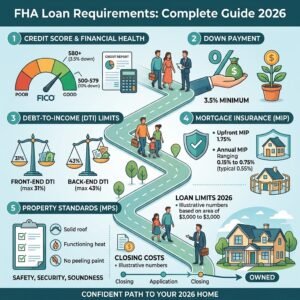
Programs such as FHA, VA, and USDA loans may have different qualification requirements and pricing structures.
Why Do Mortgage Interest Rates Change?
Many homebuyers wonder why mortgage rates can change from one week to another. The reason is that mortgage rates respond to financial markets and economic expectations.
Some major factors that cause rate changes include:
Inflation
Inflation reduces the purchasing power of money. When inflation remains high, investors often expect higher returns, which can push borrowing costs upward.
Bond Market Performance
Mortgage rates are closely connected to the bond market, especially mortgage-backed securities. When investors demand higher returns, lenders may increase mortgage rates.
Housing Market Demand
When many buyers are competing for homes, lenders may adjust pricing based on market conditions.
Global Economic Events
International events, financial uncertainty, and changes in investor confidence can also influence mortgage rates in the United States.
A practical example:
A buyer purchasing a $400,000 home with a 30-year mortgage may see a noticeable payment difference between a 5.5% and 6.5% interest rate. Even a 1% increase can add hundreds of dollars to monthly payments and tens of thousands of dollars over the life of the loan.
How Does Mortgage Interest Affect Your Monthly Payment?
Your mortgage interest rate directly affects how much you pay every month. Even a small difference in your rate can create a major change in the total amount paid over a 15-year or 30-year loan.
A mortgage payment is calculated using three main factors:
- Loan amount
- Interest rate
- Loan repayment period
For example, consider a homeowner borrowing $350,000 for 30 years:
- At a 5.5% interest rate, the monthly principal and interest payment is approximately $1,987
- At a 6.5% interest rate, the monthly principal and interest payment increases to approximately $2,212
That 1% difference means paying about $225 more every month, which adds up to more than $80,000 in additional payments over the loan term.
This is why understanding mortgage interest rates before buying a home is important. A lower rate does not just reduce your monthly payment; it can significantly reduce your lifetime borrowing cost.

What Is the Difference Between Fixed and Adjustable Mortgage Interest Rates?
Choosing the right mortgage type is one of the biggest decisions borrowers make. The two most common options are fixed-rate mortgages and adjustable-rate mortgages.
Fixed-Rate Mortgage
A fixed-rate mortgage keeps the same interest rate for the entire loan period.
Benefits include:
- Predictable monthly payments
- Protection from future rate increases
- Easier long-term budgeting
A fixed-rate mortgage is often preferred by buyers who plan to stay in their home for many years.
For example, if you lock in a 6% fixed rate on a 30-year mortgage, your interest rate will remain 6% even if market rates rise to 8% later.
Adjustable-Rate Mortgage (ARM)
An adjustable-rate mortgage starts with a fixed introductory period, but the rate can change later based on market conditions.
Common ARM structures include:
- 5/1 ARM
- 7/1 ARM
- 10/1 ARM
The first number represents the fixed period, while the second number shows how often the rate can adjust afterward.
For example, a 5/1 ARM means:
- Fixed rate for the first 5 years
- Rate adjustment every year afterward
ARMs can be useful for buyers who expect to move before the adjustment period begins, but they carry more uncertainty.
What Is Considered a Good Mortgage Interest Rate?
A “good” mortgage interest rate depends on several personal factors rather than one universal number.
The best rate available to you depends on:
- Your credit score
- Income stability
- Debt-to-income ratio
- Loan type
- Down payment
- Market conditions
- Lender competition
A borrower with excellent credit and strong finances may receive a better offer than someone with a lower credit score, even on the same day.
Instead of asking, “What is today’s lowest mortgage rate?” a better question is:
“What mortgage rate can I realistically qualify for based on my financial situation?”
How to Improve Your Credit Score Before Buying a Home
Comparing multiple lenders is one of the easiest ways to find competitive rates. Different lenders may offer different pricing because they have different risk models, fees, and profit margins.
How Can You Get a Lower Mortgage Interest Rate?
Getting a lower mortgage rate can save thousands of dollars over the life of your loan. While market conditions are outside your control, several actions can improve your chances.
Improve Your Credit Score
A stronger credit profile can help you qualify for better rates.
Ways to improve your credit include:
- Paying bills on time
- Reducing credit card balances
- Avoiding unnecessary new credit applications
- Correcting errors on your credit report
Increase Your Down Payment
A larger down payment reduces lender risk and may help you access better loan terms.
For example, increasing your down payment from 5% to 20% may improve your overall mortgage costs by reducing borrowing needs and potentially avoiding private mortgage insurance.
Compare Multiple Lenders
Many borrowers accept the first mortgage offer they receive. This can be costly.
Getting quotes from several lenders allows you to compare:
- Interest rates
- Closing costs
- Loan terms
- Fees
The Consumer Financial Protection Bureau mortgage resources recommends comparing loan offers carefully because rates and fees can vary between lenders.
Consider Buying Mortgage Points
Mortgage points allow borrowers to pay an upfront fee to reduce their interest rate.
Example:
You may pay additional money at closing to lower your rate from 6.5% to 6.25%.
Whether points are worthwhile depends on:
- How long you plan to keep the mortgage
- How much the rate reduction saves
- Your available cash
Common Mistakes Homebuyers Make About Mortgage Interest Rates
Many buyers focus only on the advertised interest rate and ignore other costs that affect the real price of their mortgage.
Choosing the Lowest Rate Without Checking Fees
A lower rate may come with higher closing costs or lender fees.
Always compare the complete loan estimate, not just the interest rate.
Ignoring Credit Improvement
Some buyers apply immediately without improving their credit profile first.
A few months of credit improvement could potentially lead to better loan terms.
Mistake 3: Not Understanding Loan Terms
A lower monthly payment does not always mean a cheaper mortgage.
A longer loan term may reduce monthly costs but increase total interest paid.
Assuming Rates Are the Same for Everyone
Mortgage rates are personalized.
Two buyers purchasing similar homes may receive different rates because their financial situations are different.
FAQ Section (FAQ Schema Ready)
What are mortgage interest rates?
Mortgage interest rates are the percentage charged by lenders for borrowing money to purchase a home. They determine how much interest you pay in addition to repaying your loan balance.
What factors affect mortgage interest rates?
Mortgage interest rates are affected by credit score, loan type, down payment, inflation, economic conditions, market trends, and lender policies.
How can I get a lower mortgage interest rate?
You can improve your chances of getting a lower mortgage interest rate by improving your credit score, saving for a larger down payment, comparing multiple lenders, and choosing the right loan option.
Are fixed mortgage rates better than adjustable rates?
Fixed mortgage rates provide predictable payments, while adjustable rates may offer lower initial costs but carry the risk of future increases. The better option depends on your financial goals.
How much does a 1% mortgage rate difference matter?
A 1% difference can significantly increase monthly payments and add tens of thousands of dollars in additional interest over a long-term mortgage.