Learn how to get pre approved for a mortgage in 2026. Discover the steps, required documents, credit tips, and how to improve your approval chances.
How to Get Pre Approved for a Mortgage in 2026
Buying a home is one of the biggest financial decisions you will ever make. Before you begin shopping for properties, it is important to understand how to get pre approved for a mortgage in 2026. A mortgage pre approval gives you a clear picture of how much you may be able to borrow and shows sellers that you are a serious buyer.
With home prices and mortgage rates changing throughout the year, getting pre approved can give you confidence and help you make informed decisions. This guide explains the complete process, the documents you need, and the best ways to improve your chances of approval.
What Is Mortgage Pre Approval?

Mortgage pre approval is a process where a lender reviews your financial information and estimates how much money you may qualify to borrow for a home purchase.
During this process, the lender evaluates your:
- Income
- Credit history
- Employment
- Assets
- Debts
- Savings
If everything meets the lender’s requirements, you receive a pre approval letter stating the estimated loan amount you may qualify for.
Why Mortgage Pre Approval Matters in 2026
The housing market remains competitive in many areas. Sellers often prefer buyers who already have financing in place because it reduces uncertainty.
Benefits of mortgage pre approval include:
- Knowing your home buying budget
- Stronger purchase offers
- Faster loan process
- Better confidence while shopping
- Fewer surprises before closing
Pre approval also helps prevent looking at homes outside your budget.
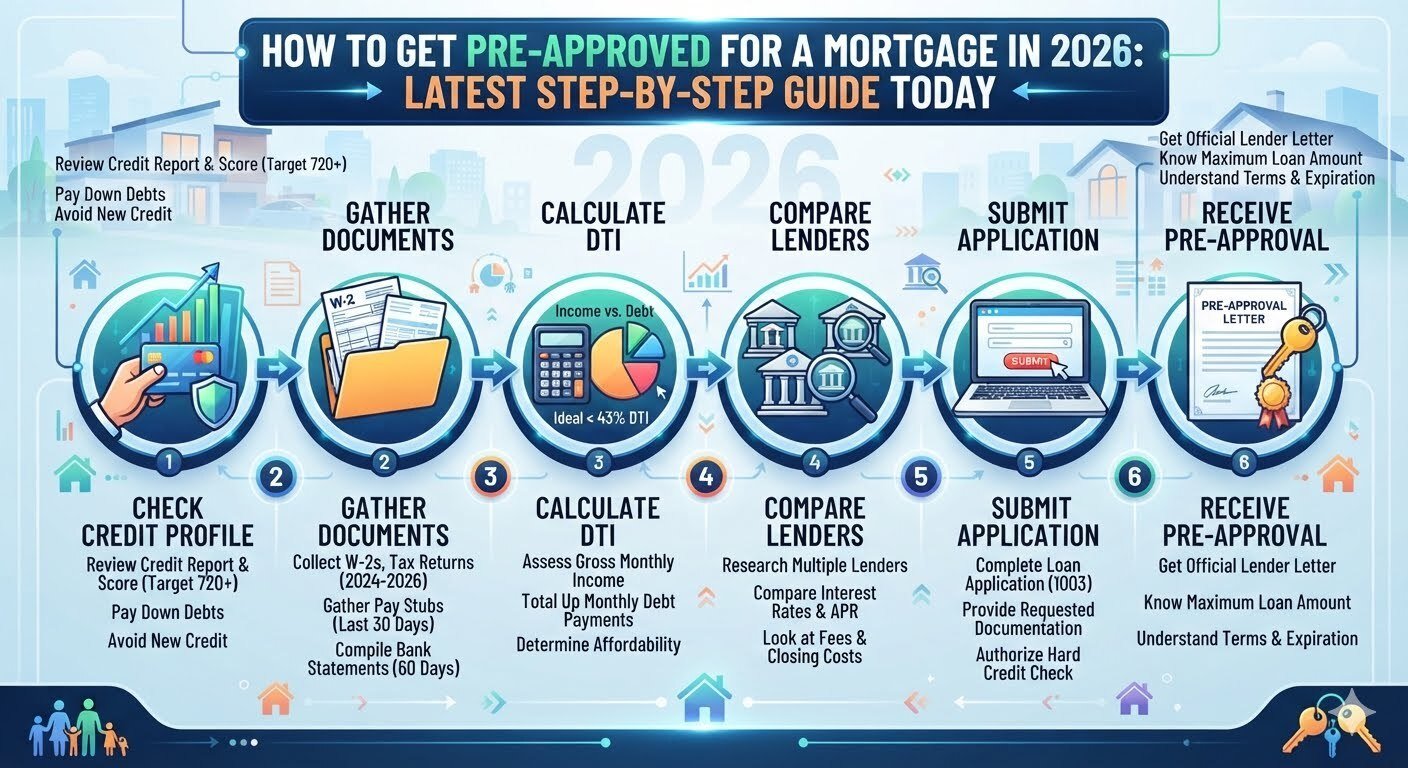
Step 1: Check Your Credit Score
Your credit score plays an important role in mortgage approval.
Before applying, review your credit report and correct any errors. Paying bills on time and reducing outstanding debt can improve your credit profile.
Higher credit scores may help you qualify for:
- Better mortgage rates
- Lower monthly payments
- More loan options
Even if your score is not perfect, many loan programs still offer financing opportunities.
Step 2: Calculate Your Budget
Knowing what you can comfortably afford is just as important as qualifying for a loan.
Consider your:
- Monthly income
- Existing debt
- Living expenses
- Savings
- Emergency fund
Avoid stretching your finances simply because you qualify for a larger loan.
Step 3: Gather Your Financial Documents
Lenders need documents that verify your financial situation.
Common documents include:
Proof of Income
Examples include:
- Recent pay stubs
- Tax returns
- W2 forms
- Bonus or commission records
Employment Verification
Lenders typically confirm your current employment and income stability.
Bank Statements
Recent bank statements help verify your available funds and savings.
Asset Information
If you have retirement accounts, investments, or additional savings, these may also be reviewed.
Identification
Government issued identification is required during the application process.
Step 4: Compare Mortgage Lenders
Not every lender offers the same rates, fees, or loan options.
Compare several lenders before making a decision.
Review:
- Interest rates
- Closing costs
- Customer reviews
- Loan programs
- Communication quality
Shopping around can help you save money over the life of your loan.
Step 5: Submit Your Mortgage Application
Once you choose a lender, complete the mortgage application.
Be prepared to provide detailed information about:
- Income
- Employment
- Assets
- Debts
- Property goals
Honest and accurate information helps prevent delays during underwriting.
Step 6: Allow the Lender to Review Your Finances
The lender carefully reviews your financial profile before issuing a pre approval.
They evaluate:
Debt to Income Ratio
This compares your monthly debt payments to your monthly income.
Lower debt levels generally improve approval chances.
Credit History
Lenders review your payment history, outstanding balances, and overall credit management.
Employment Stability
Steady employment demonstrates financial reliability.
Savings
Available savings show your ability to cover down payment and closing costs.
Step 7: Receive Your Pre Approval Letter
If approved, you receive a mortgage pre approval letter.
The letter generally includes:
- Estimated loan amount
- Loan type
- Basic approval conditions
- Expiration date
You can present this letter when making offers on homes.
How Long Does Mortgage Pre Approval Last?
Most pre approval letters remain valid for about 60 to 90 days, although this varies by lender.
If your home search takes longer, your lender may request updated financial documents before extending the approval.
Tips to Improve Your Approval Chances
Small financial improvements can increase your chances of receiving favorable loan terms.
Helpful tips include:
Pay Bills on Time
Consistent payment history strengthens your credit profile.
Reduce Existing Debt
Lower credit card balances and personal loans improve your financial picture.
Avoid Large Purchases
Do not finance vehicles, furniture, or expensive items before closing on a home.
Keep Your Employment Stable
Changing jobs during the mortgage process may delay approval.
Save More Money
Additional savings provide greater financial flexibility and may improve lender confidence.
Common Mistakes to Avoid
Many buyers accidentally make financial decisions that affect their mortgage approval.
Avoid these mistakes:
- Applying for multiple new credit accounts
- Missing loan payments
- Making large bank deposits without documentation
- Quitting your job during the loan process
- Spending your down payment savings
Careful planning can prevent unnecessary complications.
Mortgage Loan Options in 2026
Several loan programs are available depending on your financial situation.
Popular choices include:
Conventional Loans
Suitable for borrowers with strong credit and stable income.
FHA Loans
Designed for buyers who may have lower credit scores or smaller down payments.
VA Loans
Available for eligible military service members, veterans, and qualified surviving spouses.
USDA Loans
Created for eligible rural home buyers who meet income and property requirements.
Choosing the right loan depends on your financial goals and eligibility.
Does Pre Approval Guarantee Final Approval?
No.
A pre approval is an important step, but final approval happens after the lender reviews the property, completes underwriting, and verifies your financial information again.
Avoid making major financial changes before closing to reduce the risk of delays.
Conclusion
Understanding how to get pre approved for a mortgage in 2026 can make your home buying journey much smoother. Preparing your finances, reviewing your credit, gathering documents, and comparing lenders will help you move through the process with confidence.
A mortgage pre approval not only helps you understand your budget but also strengthens your position when making an offer on a home. By planning ahead and maintaining healthy financial habits, you can improve your chances of securing the mortgage that fits your needs.
Frequently Asked Questions
What does mortgage pre approval mean?
Mortgage pre approval is a lender’s estimate of how much money you may qualify to borrow based on your financial information.
How long does mortgage pre approval take?
Many lenders provide pre approval within one to three business days, although timelines vary.
Does mortgage pre approval affect my credit score?
A lender may perform a hard credit inquiry, which can have a small temporary impact on your credit score.
What credit score do I need for mortgage pre approval?
Requirements vary by loan program and lender. Higher credit scores generally qualify for better interest rates.
Can I get pre approved before finding a home?
Yes. Most buyers obtain pre approval before beginning their home search.
How long is a mortgage pre approval valid?
Most pre approvals remain valid for about 60 to 90 days.
Can I apply with more than one lender?
Yes. Comparing multiple lenders can help you find better rates and loan terms.