Learn the minimum credit score for mortgage approval in 2026 by loan type. Compare FHA, VA, USDA, conventional, and jumbo loan requirements today.
Minimum Credit Score for Mortgage 2026: Credit Score Requirements by Loan Type
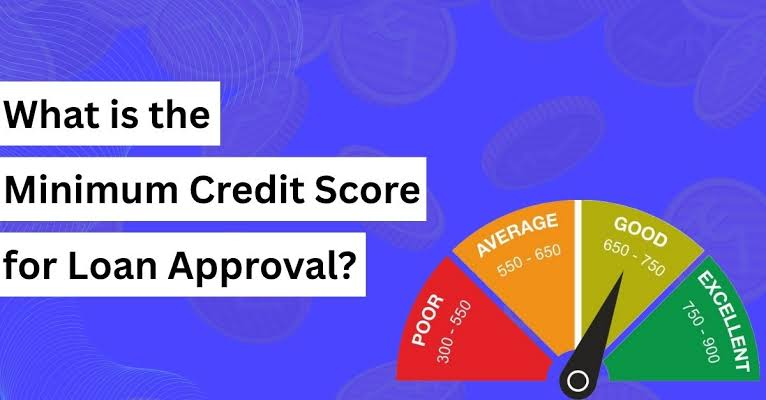
Buying a home in 2026 starts with understanding one important number: your credit score. Your credit score affects the loan programs you qualify for, your mortgage interest rate, and your monthly payment.
Many home buyers believe they need perfect credit to qualify for a mortgage. The truth is that different loan programs have different credit score requirements. Some loans accept lower scores, while others require stronger credit for the best terms.
In this guide, we explain the minimum credit score for mortgage 2026 by loan type, what lenders look for, and how you can improve your chances of approval.
Why Your Credit Score Matters

Your credit score tells lenders how responsibly you have managed debt in the past. A higher score usually means lower risk, which often results in:
- Better mortgage rates
- Lower monthly payments
- Easier loan approval
- More loan options
- Lower closing costs in some cases
Even if your score is not perfect, there are mortgage programs designed to help qualified buyers become homeowners.
Minimum Credit Score for Mortgage 2026 by Loan Type
Here is a general overview of common mortgage programs.
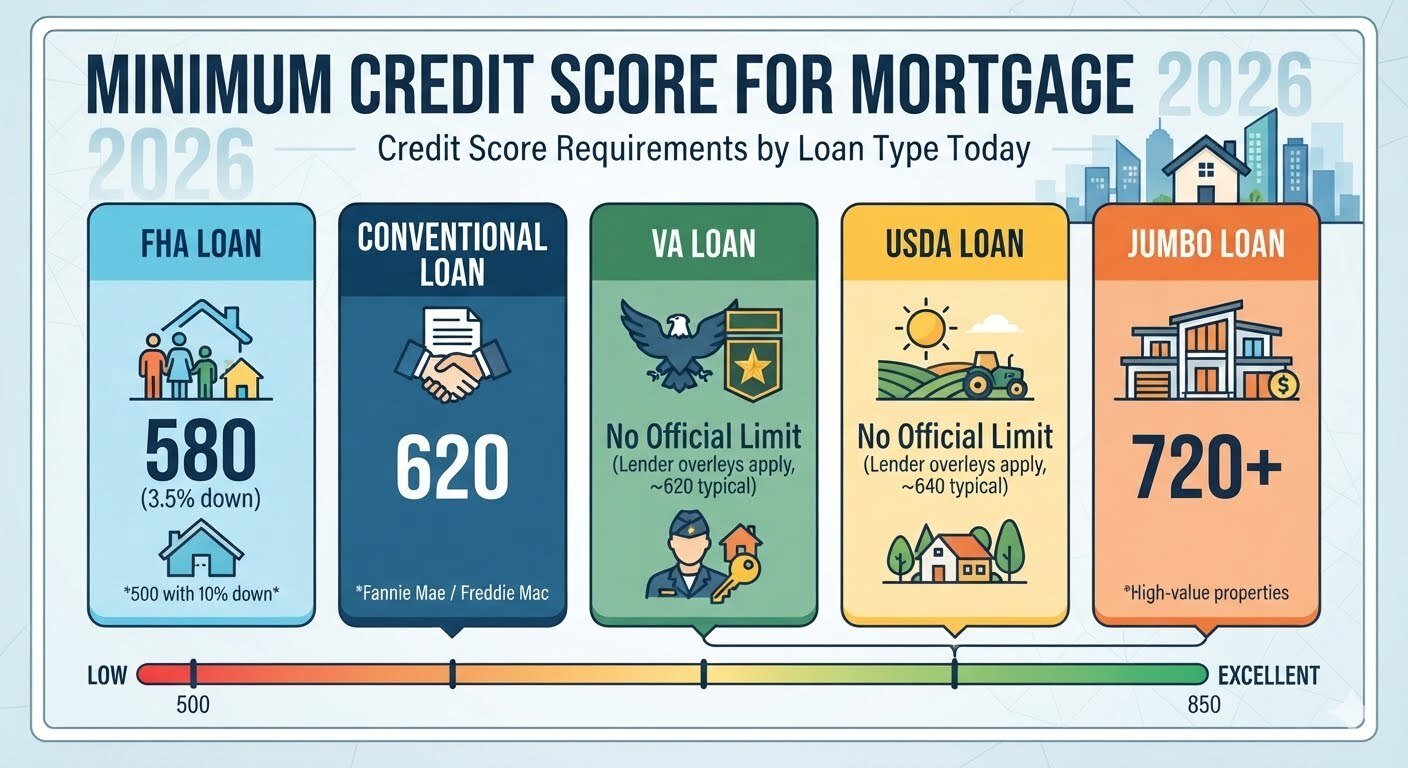
| Loan Type | Typical Minimum Credit Score |
|---|---|
| FHA Loan | 500 with qualifying down payment or 580 for lower down payment |
| Conventional Loan | 620 |
| VA Loan | Usually 620 although some lenders may vary |
| USDA Loan | Usually 640 for streamlined approval |
| Jumbo Loan | Often 680 to 700 or higher |
Remember that individual lenders may have their own requirements.
FHA Loan Credit Score Requirements
FHA loans remain one of the most popular choices for buyers with limited credit history or lower credit scores.
Minimum Credit Score
- 580 to qualify for a lower down payment
- 500 with a larger down payment if lender guidelines are met
Best For
- First time home buyers
- Buyers rebuilding credit
- Buyers with moderate income
FHA loans also allow higher debt ratios than many conventional loan programs, making qualification easier for some borrowers.
Conventional Loan Credit Score Requirements
Conventional loans are backed by private lenders rather than the federal government.
Minimum Credit Score
Most lenders require a minimum score of 620.
Better Rates with Higher Scores
Although 620 may qualify, borrowers with scores of 740 or higher often receive the lowest mortgage rates.
Conventional loans are ideal for borrowers with:
- Strong credit history
- Stable income
- Larger down payment
VA Loan Credit Score Requirements
VA loans are available to eligible veterans, active military members, and certain surviving spouses.
Minimum Credit Score
The Department of Veterans Affairs does not set a minimum credit score.
However, many lenders prefer scores around 620.
Benefits
- No down payment for many borrowers
- No private mortgage insurance
- Competitive mortgage rates
- Flexible qualification guidelines
VA loans continue to be one of the best financing options for eligible military families.
USDA Loan Credit Score Requirements
USDA loans help buyers purchase homes in eligible rural and suburban areas.
Minimum Credit Score
Many lenders look for a 640 credit score for automated approval.
Applicants with lower scores may still qualify through manual underwriting if they meet additional requirements.
Benefits
- No down payment
- Affordable mortgage insurance
- Lower monthly payments
- Income limits apply
Jumbo Loan Credit Score Requirements
Jumbo loans finance homes above conforming loan limits.
Since these loans involve larger amounts, lenders typically require stronger financial qualifications.
Minimum Credit Score
Most lenders prefer scores between 680 and 700, although some require even higher scores.
Borrowers should also expect:
- Larger cash reserves
- Lower debt ratio
- Stable employment
- Significant down payment
What Else Do Mortgage Lenders Review?
Your credit score is only one part of the approval process.
Lenders also evaluate:
Income
Stable and reliable income helps demonstrate your ability to repay the loan.
Debt to Income Ratio
Your monthly debt payments compared to your monthly income should fall within lender guidelines.
Employment History
Many lenders prefer a consistent employment record over the past two years.
Down Payment
A larger down payment may improve approval chances and reduce borrowing costs.
Savings
Cash reserves show lenders you can handle unexpected expenses after closing.
How to Improve Your Credit Score Before Applying
Improving your score even slightly can help you qualify for better mortgage rates.
Consider these steps:
Pay Bills on Time
Payment history has the greatest impact on your credit score.
Reduce Credit Card Balances
Lower credit utilization often improves your score.
Avoid Opening New Credit
New accounts can temporarily reduce your credit score.
Review Your Credit Report
Check for reporting errors and dispute any inaccurate information.
Keep Older Accounts Open
A longer credit history may benefit your overall score.
What Credit Score Gets the Best Mortgage Rates?
Although borrowers may qualify with lower scores, the best mortgage rates are usually available to buyers with credit scores above 740.
Higher scores can lead to:
- Lower interest costs
- Smaller monthly payments
- Greater buying power
- Lower lifetime borrowing costs
Even improving your score by twenty or thirty points may save thousands of dollars over the life of your mortgage.
Tips for First Time Home Buyers
If you are buying your first home in 2026:
- Check your credit before applying.
- Save for your down payment and closing costs.
- Compare offers from multiple lenders.
- Ask about government backed loan programs.
- Get preapproved before shopping for a home.
Preparation can make the mortgage process faster and less stressful.
Conclusion
The minimum credit score for mortgage 2026 depends on the loan program you choose. FHA loans may allow scores as low as 500 under certain conditions, while conventional loans generally require at least 620. VA and USDA loans offer flexible options for eligible borrowers, and jumbo loans usually require stronger credit.
Remember that your credit score is only one part of the mortgage approval process. Income, debt, savings, employment, and your down payment all play important roles. Improving your credit before applying can help you secure better rates and save money over the life of your loan.
Whether you are purchasing your first home or upgrading to a new property, understanding credit score requirements is the first step toward successful home ownership.
Frequently Asked Questions
What is the minimum credit score for a mortgage in 2026?
It depends on the loan type. FHA loans may accept scores starting at 500 under certain conditions, while conventional loans usually require at least 620.
Can I buy a house with a 580 credit score?
Yes. Many borrowers with a 580 credit score qualify for FHA loans if they meet income and down payment requirements.
Is a 620 credit score good enough for a mortgage?
Yes. A 620 score often meets the minimum requirement for many conventional and VA lenders, although higher scores usually receive better interest rates.
Which mortgage loan has the lowest credit score requirement?
FHA loans generally offer the lowest minimum credit score requirements among major mortgage programs.
Does a higher credit score lower my mortgage payment?
Yes. Higher credit scores often qualify for lower interest rates, reducing monthly mortgage payments.
Can I qualify for a mortgage with bad credit?
Yes. Government backed loan programs may help buyers with lower credit scores qualify if they meet other lending requirements.
What credit score is best for buying a home?
A credit score of 740 or higher generally provides access to the most competitive mortgage rates and loan terms.