Learn how much it costs to refinance a mortgage in 2026. Explore refinance fees, closing costs, savings tips, and ways to lower your monthly payment.
How Much Does It Cost to Refinance a Mortgage in 2026?

Refinancing a mortgage can help homeowners reduce their monthly payments, lower their interest rate, change their loan terms, or access home equity. However, many homeowners ask one important question before starting the process: How much does it cost to refinance a mortgage in 2026?
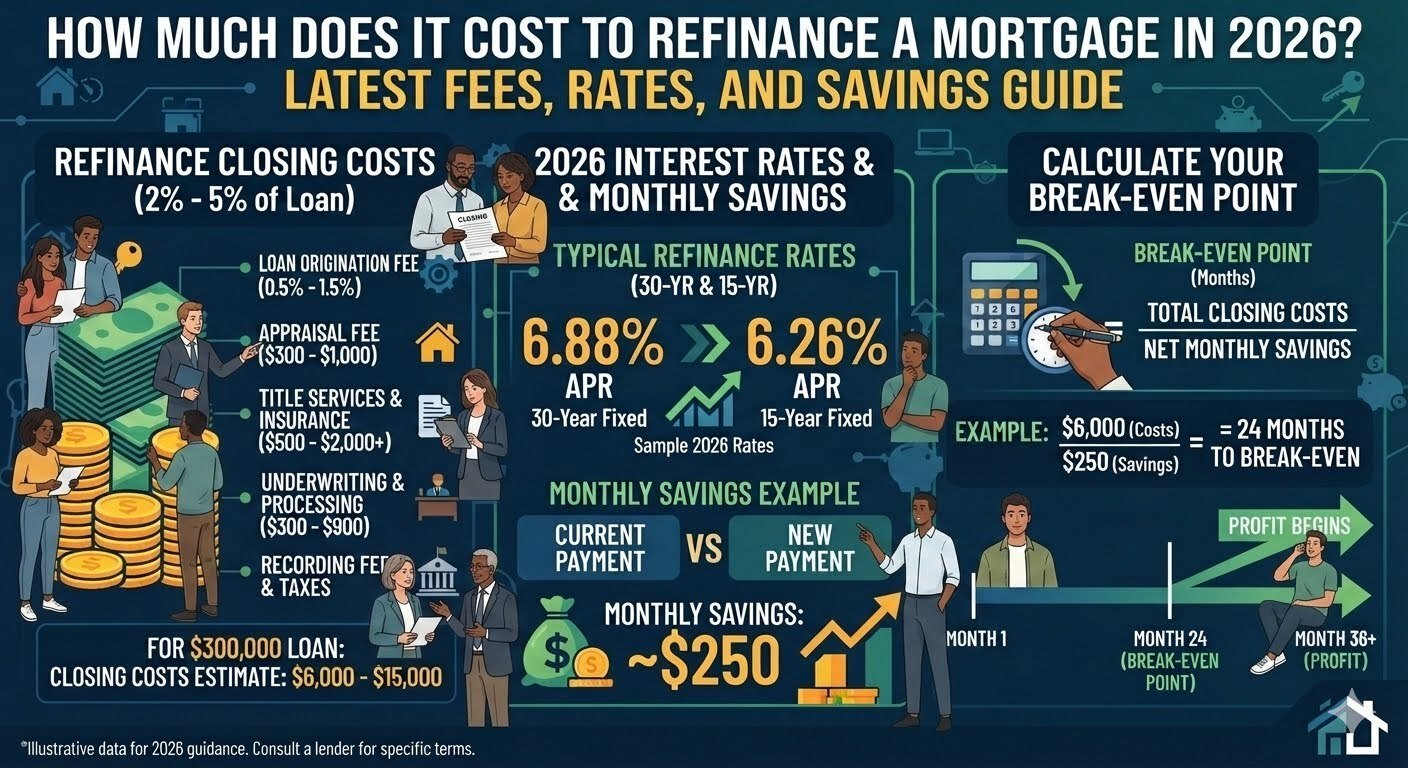
The cost to refinance a mortgage depends on several factors, including your loan amount, lender fees, location, credit profile, and the type of refinance you choose. On average, homeowners can expect refinance costs to range from 2% to 6% of their loan amount.
For example, if your remaining mortgage balance is $250,000, refinancing costs may typically range between $5,000 and $15,000. Understanding these expenses can help you decide whether refinancing makes financial sense.
What Is the Average Cost to Refinance a Mortgage in 2026?

The average cost to refinance a mortgage in 2026 usually includes several fees charged by lenders and third party service providers. These costs are often similar to the expenses paid when buying a home.
Most homeowners pay between $3,000 and $10,000 in refinance closing costs, depending on their loan size and location.
Common refinance costs include:
1. Lender Origination Fees
Lenders may charge an origination fee for processing and preparing your new mortgage loan. This fee is often around 0.5% to 1% of the loan amount.
For a $300,000 mortgage, an origination fee could cost between $1,500 and $3,000.
2. Appraisal Fees
A home appraisal helps determine your property’s current market value. Many lenders require an appraisal before approving a refinance.
The average appraisal cost is usually between $300 and $700.
3. Credit Report Fees
Lenders review your credit history during the refinance process. Credit report fees are usually small and may range from $30 to $100.
4. Title Search and Insurance Costs
A title search confirms that there are no ownership issues with the property. Title insurance may also be required depending on your lender and location.
These costs can range from $500 to $2,000.
5. Recording and Government Fees
Local governments often charge fees to update property records after refinancing. These fees vary by location but are usually a few hundred dollars.
Factors That Affect Mortgage Refinance Costs in 2026
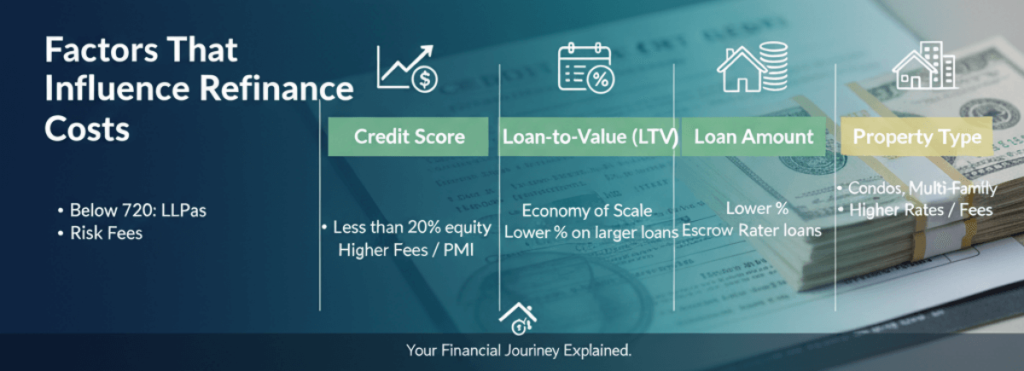
The cost to refinance a mortgage is different for every homeowner. Several factors can increase or decrease your total expenses.
Your Loan Amount
A larger mortgage balance usually means higher refinance costs because many fees are based on a percentage of the loan amount.
For example, refinancing a $500,000 mortgage may cost more than refinancing a $150,000 loan.
Your Credit Score
Your credit score can affect both your refinance approval and your interest rate. Borrowers with stronger credit profiles may qualify for better rates and lower overall costs.
Improving your credit before applying may help you save money over the life of the loan.
Your Home Equity
Homeowners with more equity may have access to better refinance terms. Higher equity can also reduce certain lender risks.
Before refinancing, check your current home value and remaining mortgage balance.
The Type of Refinance Loan
Different refinance options come with different costs.
Rate and Term Refinance
A rate and term refinance changes your interest rate, loan length, or both. Many homeowners choose this option to lower monthly payments.
Cash Out Refinance
A cash out refinance allows homeowners to borrow against their home equity and receive cash. This option may have higher costs because the new loan amount is larger.
Streamline Refinance
Some government backed loans may offer simpler refinance programs with fewer requirements. These programs can reduce paperwork and sometimes lower expenses.
Can You Refinance a Mortgage With No Closing Costs?
Many lenders advertise no closing cost refinance options. However, this does not always mean refinancing is free.
Instead of paying upfront fees, lenders may increase your interest rate or add the costs to your new loan balance.
A no closing cost refinance can make sense for homeowners who plan to stay in their home for a short period. However, comparing the total loan cost is important before making a decision.
How to Reduce Mortgage Refinance Costs in 2026
Refinancing does not always require paying the full amount of closing costs upfront. Here are some ways to lower your expenses:
Compare Multiple Mortgage Lenders
Different lenders offer different refinance rates and fees. Getting quotes from several lenders can help you find better terms.
Improve Your Credit Score
A higher credit score may help you qualify for lower interest rates, which can reduce your long term costs.
Negotiate Fees
Some lender fees may be negotiable. Ask lenders about discounts, fee reductions, or available programs.
Consider Rolling Costs Into Your Loan
Some homeowners choose to add refinance costs to their new mortgage balance. This avoids upfront payments but increases the total amount borrowed.
Calculate Your Break Even Point
The break even point shows how long it takes for your monthly savings to cover refinance costs.
For example, if refinancing costs $5,000 and saves you $250 per month, your break even point would be 20 months.
If you plan to stay in your home longer than that, refinancing may provide financial benefits.
Is Refinancing a Mortgage Worth It in 2026?
Refinancing may be a smart choice if it helps you save money, but it is not right for every homeowner.
Refinancing may be beneficial if:
- You can lower your interest rate
- You want a lower monthly payment
- You want to shorten your loan term
- You need cash from your home equity
- You want to switch from an adjustable rate mortgage to a fixed rate mortgage
However, refinancing may not make sense if your savings are small or you plan to move soon.
Before making a decision, compare your current mortgage costs with your new loan terms.
Mortgage Refinance Cost Example
Let’s say you have a remaining mortgage balance of $300,000.
Your refinance costs may include:
- Lender fees: $2,500
- Appraisal: $500
- Title services: $1,200
- Government fees: $300
Your total refinance cost would be around $4,500.
If your new mortgage saves you $300 per month, your break even point would be about 15 months.
After that point, your monthly savings could provide additional financial benefits.
Frequently Asked Questions About Mortgage Refinance Costs
How much does it cost to refinance a mortgage in 2026?
The cost to refinance a mortgage in 2026 usually ranges from 2% to 6% of the loan amount. Many homeowners pay between $3,000 and $10,000 depending on their loan size and lender fees.
Can I refinance my mortgage without paying closing costs?
Yes, some lenders offer no closing cost refinance options. However, these costs are usually included through a higher interest rate or added to the loan balance.
Are refinance costs tax deductible?
Some refinance expenses may qualify for tax benefits, but rules vary based on your situation. It is best to speak with a tax professional for guidance.
How long does it take to recover refinance costs?
The time needed to recover refinance expenses depends on your monthly savings. Many homeowners calculate their break even point to determine whether refinancing is worthwhile.
Does refinancing lower monthly mortgage payments?
Refinancing can lower monthly payments if you qualify for a better interest rate, extend your loan term, or restructure your mortgage.
What credit score do I need to refinance a mortgage?
Credit requirements vary by lender and loan program. A stronger credit score can improve your chances of getting better refinance rates.
Should I refinance my mortgage in 2026?
Whether refinancing is a good choice depends on your current rate, new loan terms, closing costs, and how long you plan to stay in your home.
Conclusion: Understand Your Mortgage Refinance Costs Before Applying
The cost to refinance a mortgage in 2026 depends on your loan amount, lender fees, credit score, and refinance goals. While refinancing can create significant savings, it is important to calculate all expenses before moving forward.
Compare refinance offers, review closing costs, and calculate your potential savings before choosing a lender. A smart refinance decision can help you reduce monthly payments and improve your overall financial position.
Ready to explore your refinance options? Use a mortgage refinance calculator, compare current rates, and speak with a trusted mortgage professional to find the best solution for your home.