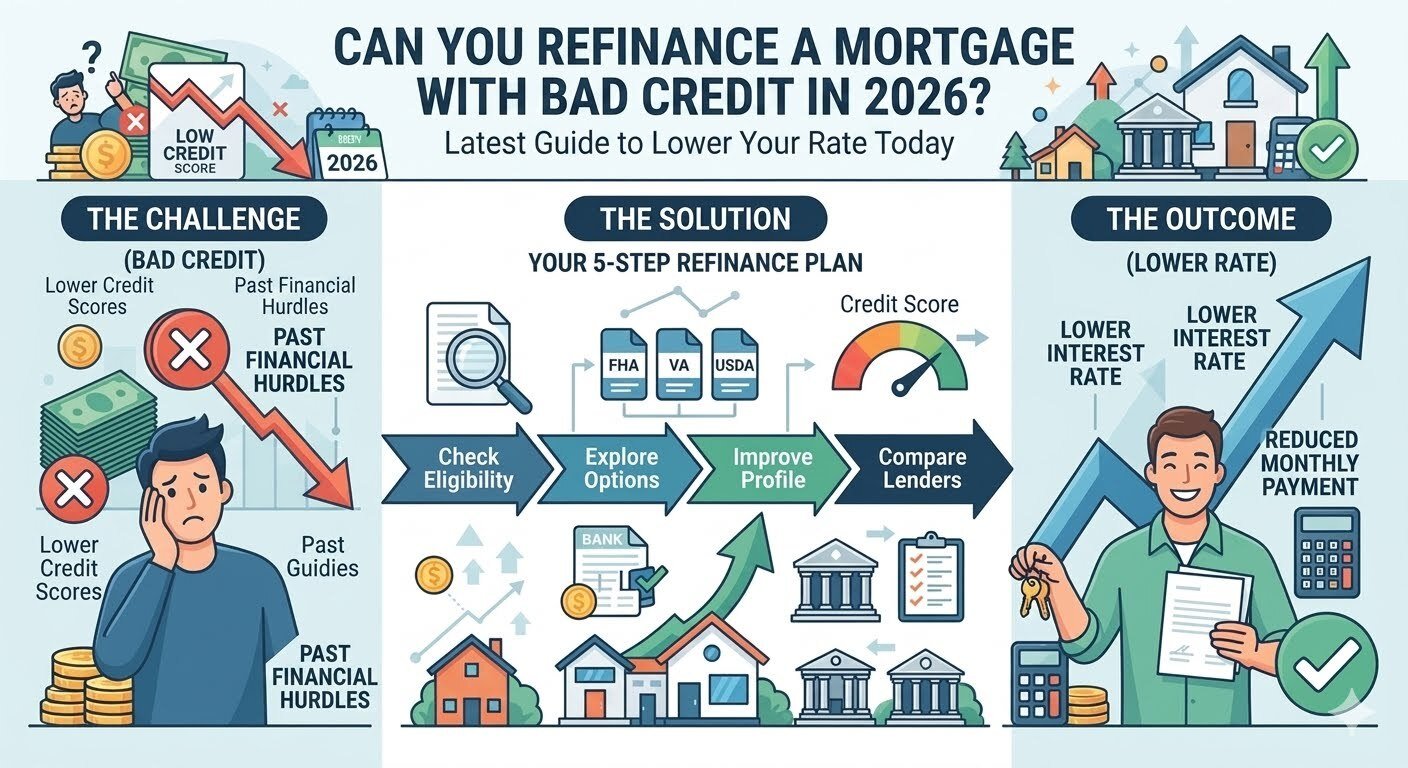
Learn how to refinance a mortgage with bad credit in 2026. Discover lender requirements, credit score tips, costs, and ways to save money.
Can You Refinance a Mortgage With Bad Credit in 2026?

Many homeowners believe they cannot refinance because of a low credit score. The good news is that refinancing with bad credit is possible in many cases. While you may not qualify for the lowest interest rates, there are lenders that work with borrowers who have less than perfect credit.
If you have built enough home equity, maintained steady income, and made recent mortgage payments on time, refinancing may help lower your monthly payment, reduce your interest rate, or change your loan terms.
This guide explains how mortgage refinance works with bad credit, what lenders look for, and how you can improve your chances of approval.
What Does It Mean to Refinance a Mortgage?
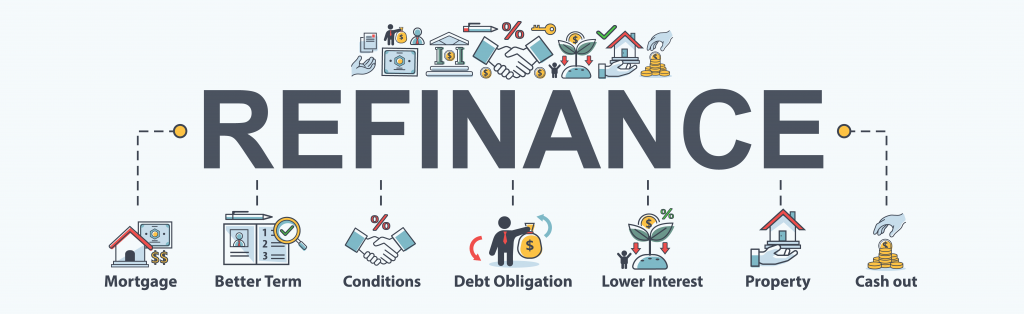
Mortgage refinance means replacing your current home loan with a new one. The new loan pays off the existing mortgage, and you begin making payments on the new loan.
Homeowners refinance for many reasons, including:
- Lower interest rates
- Lower monthly payments
- Shorter loan term
- Switch from adjustable rate to fixed rate
- Access home equity through cash out refinance
- Remove mortgage insurance in some situations
Even if your credit score is lower than average, refinancing could still be available.
Can You Refinance a Mortgage With Bad Credit?

Yes. You can refinance a mortgage with bad credit, but approval depends on more than your credit score.
Mortgage lenders review your complete financial picture before making a decision.
They often consider:
- Credit score
- Income stability
- Employment history
- Debt to income ratio
- Home equity
- Mortgage payment history
- Property value
If other parts of your application are strong, you may still qualify despite having poor credit.
What Credit Score Do You Need?
There is no single minimum credit score because each lender has different guidelines.
Generally:
620 or higher
Many conventional refinance programs begin around this range.
580 to 619
Some government backed refinance programs and certain lenders may accept borrowers within this range.
Below 580
Options become more limited, but some refinance programs may still be available if you have significant home equity or a qualified co borrower.
Remember that higher credit scores usually qualify for lower interest rates and lower monthly payments.
Types of Mortgage Refinance Options
Conventional Refinance
Conventional loans generally require stronger credit and financial qualifications. Borrowers with higher scores often receive better rates.
FHA Refinance
If you currently have an FHA loan, refinancing through an FHA program may be easier than qualifying for a conventional refinance.
VA Refinance
Eligible veterans and military borrowers may qualify for refinance programs with flexible credit requirements.
USDA Refinance
Homeowners with USDA loans may have refinance opportunities depending on program eligibility.
Cash Out Refinance
This option allows you to borrow against your home equity while replacing your current mortgage. Credit requirements may be stricter because you are increasing your loan amount.
How to Improve Your Chances of Approval
Improving your application before applying can make a significant difference.
Increase Your Credit Score
Pay bills on time every month.
Reduce credit card balances.
Avoid applying for new credit before refinancing.
Review your credit report for errors.
Lower Your Debt
Reducing existing debt improves your debt to income ratio and shows lenders you can comfortably manage mortgage payments.
Build More Home Equity
Higher home equity lowers the lender’s risk and may improve approval chances.
Show Stable Income
Provide proof of consistent employment and reliable income.
Compare Multiple Lenders
Different lenders have different qualification requirements. Shopping around can help you find better rates and more flexible approval standards.
Benefits of Refinancing With Bad Credit
Even if your credit is less than perfect, refinancing could provide several advantages.
Lower Monthly Payments
Extending your loan term or securing a better rate may reduce monthly payments.
Better Loan Terms
You may move from an adjustable rate mortgage to a fixed rate mortgage for more predictable payments.
Debt Consolidation
Some homeowners use cash out refinancing to pay off higher interest debts.
Financial Stability
A lower payment may improve your monthly budget and provide greater financial flexibility.
Challenges You Should Know
Borrowers with bad credit should also understand potential disadvantages.
Higher Interest Rates
Lower credit scores often lead to higher mortgage rates.
Closing Costs
Refinancing usually includes lender fees, appraisal costs, title fees, and other closing expenses.
More Documentation
Some lenders request additional financial documents for borrowers with weaker credit.
Limited Loan Choices
Not every refinance program is available to borrowers with poor credit.
Tips Before Applying
Before submitting your refinance application, consider these important steps.
- Check your current credit score.
- Review your credit report carefully.
- Gather income documents.
- Estimate your home value.
- Compare offers from several lenders.
- Calculate potential monthly savings.
- Understand total closing costs.
Being prepared can improve your experience and help you find the right refinance loan.
Is Refinancing Worth It?
The answer depends on your financial goals.
Refinancing may make sense if it helps you reduce monthly payments, lower your interest rate, shorten your loan term, or improve your overall financial situation.
However, if closing costs outweigh the savings or your credit score is likely to improve soon, waiting a few months may result in better loan offers.
Every homeowner should compare the total cost of refinancing against the expected savings before making a final decision.
Conclusion
Refinancing a mortgage with bad credit is possible in 2026. While you may face higher interest rates and stricter approval requirements, many lenders consider more than just your credit score.
Strong income, consistent mortgage payments, sufficient home equity, and lower debt can all improve your chances of qualifying. Taking time to improve your financial profile before applying can also help you secure better loan terms.
Always compare several lenders, understand the total costs, and choose a refinance option that supports your long term financial goals.
Frequently Asked Questions
Can I refinance with a credit score below 600?
Yes. Some lenders and government loan programs may approve borrowers with credit scores below 600, depending on income, home equity, and payment history.
Will refinancing hurt my credit score?
A refinance application may cause a small temporary drop because of a credit inquiry, but responsible payments can help your score over time.
Can I refinance if I missed mortgage payments?
It depends on the lender. Recent missed payments may reduce approval chances, but some programs offer flexibility based on your financial situation.
How much home equity do I need to refinance?
Many lenders prefer at least 20 percent equity, although some refinance programs require less.
Can I refinance to lower my monthly payment?
Yes. Refinancing may reduce monthly payments through a lower interest rate or a longer loan term.
Should I improve my credit before refinancing?
If possible, yes. Even a modest increase in your credit score may qualify you for better rates and lower monthly payments.
Can I refinance with another lender?
Yes. You are not required to refinance with your current mortgage lender. Comparing several lenders may help you find better loan terms.