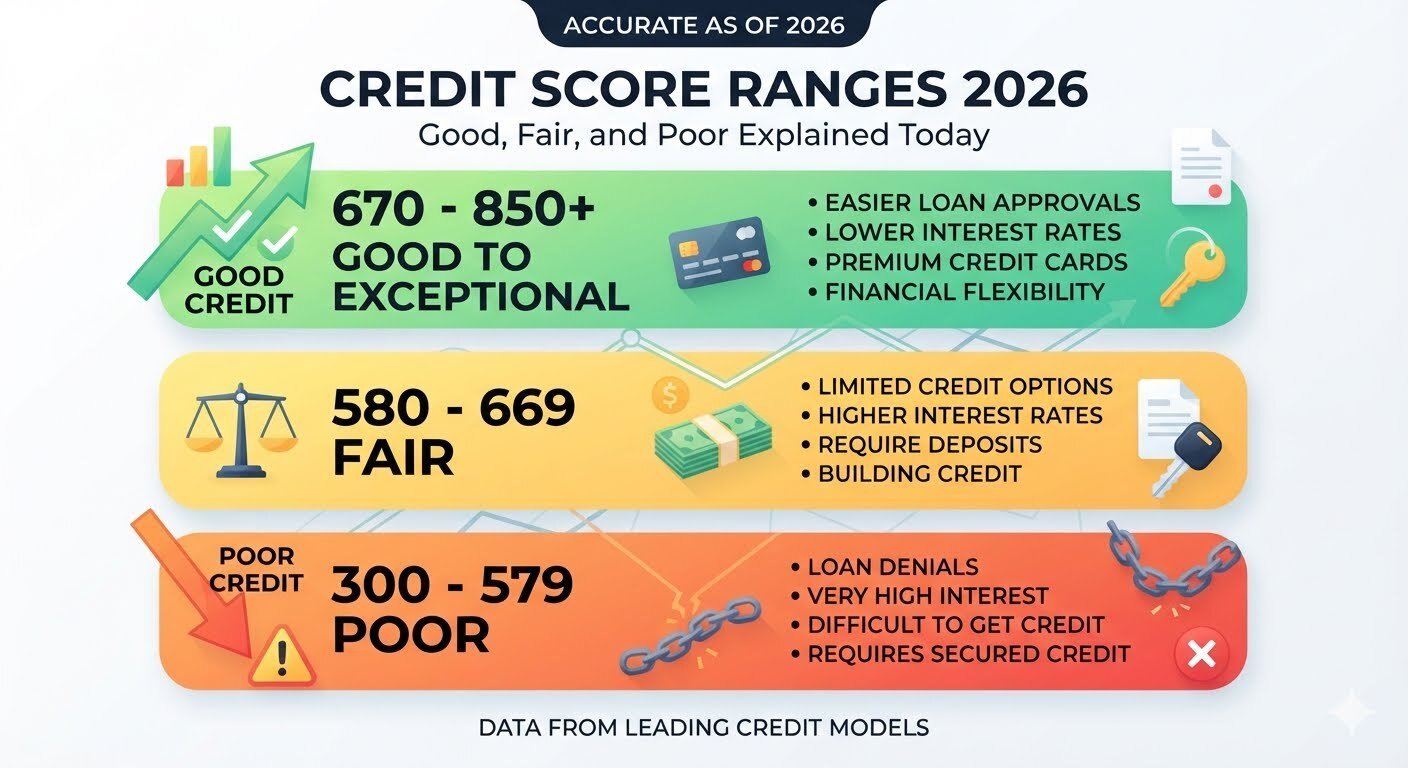
Learn the latest credit score ranges for 2026. Discover what is considered a good, fair, and poor credit score and how your score affects loans, credit cards, and mortgage approval.
Credit Score Ranges 2026: Good, Fair, and Poor Credit Scores Explained
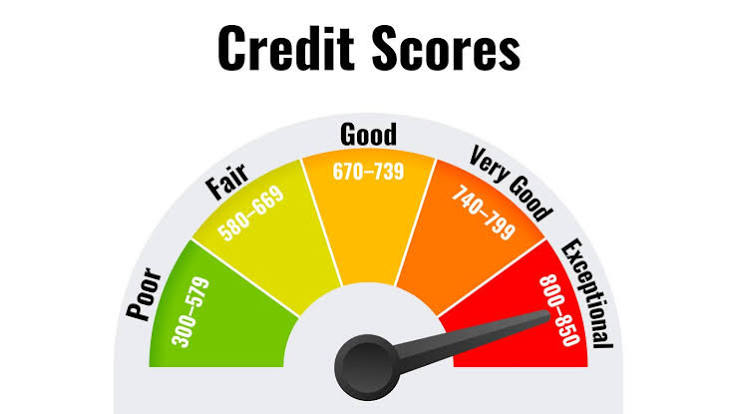
Your credit score is one of the most important numbers in your financial life. Whether you want to buy a home, finance a car, apply for a credit card, or qualify for a personal loan, lenders use your credit score to evaluate your financial reliability.
Understanding credit score ranges in 2026 can help you know where you stand and what steps you can take to improve your financial future. In this guide, we explain what each credit score range means, how scores are calculated, and how you can improve your credit over time.
What Is a Credit Score?
A credit score is a three digit number that represents your creditworthiness. It helps lenders estimate how likely you are to repay borrowed money on time.
Most lenders use scoring models such as FICO Score and VantageScore, both of which generally range from 300 to 850.
A higher score usually means lower lending risk, which may help you qualify for better interest rates and more favorable loan terms.
Credit Score Ranges for 2026
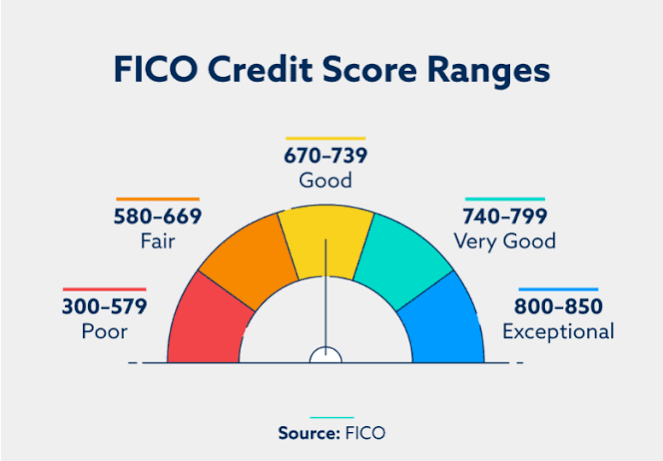
Here are the most commonly used credit score ranges.
| Credit Score | Rating |
|---|---|
| 300 to 579 | Poor |
| 580 to 669 | Fair |
| 670 to 739 | Good |
| 740 to 799 | Very Good |
| 800 to 850 | Excellent |
These ranges are widely recognized by many lenders across the United States.
Poor Credit Score
Score Range: 300 to 579
A poor credit score indicates that a borrower has experienced significant credit challenges.
Common reasons include:
- Missed payments
- Collections
- Bankruptcy
- High credit card balances
- Limited credit management
What Happens With a Poor Credit Score?
You may experience:
- Higher interest rates
- Loan application denials
- Lower credit limits
- Larger security deposits
- Fewer financing choices
Many borrowers with poor credit can still qualify for FHA loans or secured credit cards, although the requirements may be stricter.
Fair Credit Score
Score Range: 580 to 669
A fair credit score shows that you are making progress but still have room for improvement.
Many lenders will approve borrowers with fair credit, although they may charge higher interest rates than applicants with stronger scores.
Benefits of Fair Credit
- Better approval odds than poor credit
- Access to more loan options
- Opportunity to improve rates over time
- Eligible for many mortgage programs
Improving your score even by a few points may help you save thousands of dollars over the life of a mortgage.
Good Credit Score
Score Range: 670 to 739
A good credit score is considered healthy by many lenders.
Borrowers in this range often qualify for competitive financing options.
Advantages of Good Credit
- Lower interest rates
- Easier loan approval
- Better credit card offers
- Higher borrowing limits
- Improved mortgage eligibility
Many home buyers aim to maintain a score of at least 670 before applying for a conventional mortgage.
Very Good Credit Score
Score Range: 740 to 799
Very good credit demonstrates strong financial management.
Borrowers in this range often receive attractive loan offers and competitive interest rates.
Benefits include:
- Excellent mortgage rates
- Better auto loan offers
- Premium rewards credit cards
- Lower borrowing costs
Excellent Credit Score
Score Range: 800 to 850
Excellent credit represents outstanding credit management over many years.
Although lenders consider many factors besides your score, borrowers with excellent credit often receive the best available financing options.
Advantages include:
- Lowest interest rates
- Highest approval chances
- Larger loan amounts
- Premium financial products
- Greater negotiating power
What Affects Your Credit Score?
Several factors influence your credit score.
Payment History
Paying bills on time is the single most important factor.
Late payments can significantly reduce your score.
Credit Utilization
Keep your credit card balances low.
Many experts recommend using less than thirty percent of your available credit.
Length of Credit History
Older accounts help establish a longer credit history.
Avoid closing your oldest credit accounts unless necessary.
Credit Mix
Using different types of credit responsibly may improve your score over time.
Examples include:
- Credit cards
- Auto loans
- Mortgages
- Student loans
New Credit Applications
Applying for many new accounts within a short period may temporarily lower your score.
How to Improve Your Credit Score in 2026
Improving your credit score takes consistency, but the effort can pay off.
Pay Every Bill on Time
Payment history carries significant weight in most credit scoring models.
Setting up automatic payments can help avoid missed due dates.
Reduce Credit Card Balances
Pay down revolving debt whenever possible.
Lower balances generally improve your credit utilization ratio.
Review Your Credit Reports
Check your credit reports regularly for errors or fraudulent accounts.
Dispute any inaccurate information promptly.
Avoid Unnecessary Credit Applications
Only apply for new credit when you truly need it.
Too many inquiries within a short period can affect your score.
Keep Older Accounts Open
Maintaining older accounts can strengthen your credit history.
Why Credit Score Matters for Mortgages
Your credit score directly affects your mortgage application.
A stronger score may help you receive:
- Lower monthly payments
- Better interest rates
- Lower closing costs
- More lender choices
- Easier loan approval
Even a modest improvement in your credit score before applying for a mortgage can produce meaningful savings throughout the life of the loan.
Tips for First Time Home Buyers
If you plan to purchase your first home in 2026, consider these simple steps:
- Check your credit score early.
- Pay off outstanding debt.
- Save for a larger down payment.
- Avoid opening new credit accounts before applying.
- Compare offers from several lenders.
Preparing several months before applying for a mortgage can strengthen your financial position.
Conclusion
Understanding credit score ranges in 2026 helps you make smarter financial decisions. Whether your score is poor, fair, good, very good, or excellent, there are practical steps you can take to improve it over time.
By paying bills on time, reducing debt, maintaining older accounts, and monitoring your credit reports, you can build stronger credit and increase your chances of qualifying for better loans and lower interest rates.
A better credit score does more than improve loan approval odds. It can also reduce borrowing costs and create more financial opportunities in the future.
Frequently Asked Questions
What is considered a good credit score in 2026?
A good credit score generally falls between 670 and 739.
What credit score is needed to buy a home?
Many conventional loans prefer a score of 620 or higher, while some FHA loans may allow lower scores if other requirements are met.
Can I improve my credit score quickly?
Paying bills on time, reducing credit card balances, and correcting report errors may help improve your score over time.
Does checking my own credit score lower it?
No. Checking your own credit score is considered a soft inquiry and does not affect your score.
What is the highest possible credit score?
The highest commonly used credit score is 850.
Why is my credit score different between lenders?
Different lenders may use different scoring models or different versions of the same scoring system.
How often should I check my credit report?
Checking your credit reports at least once each year is recommended. Monitoring them more frequently can help you detect errors or identity theft sooner.