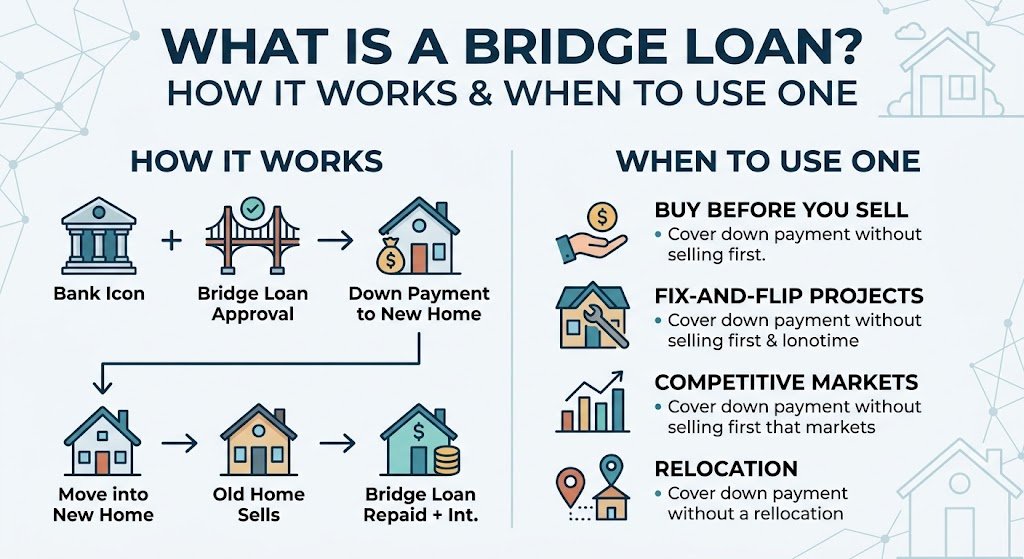
Buying a new home while your current property is still on the market can create a major financial challenge. What Is a Bridge Loan? How It Works and When to Use One is a common question among homeowners who need temporary funding to cover the gap between selling one property and purchasing another.
A bridge loan is a short-term financing option that allows homeowners to access money from their existing home equity to purchase a new property before their current home sells. It “bridges” the financial gap between two real estate transactions.
For example, imagine you find your dream home, but your current house has not sold yet. Waiting could mean losing the opportunity, while buying without selling may create a cash flow problem. A bridge loan can provide temporary funds to help complete the purchase.
After reviewing different home financing situations over the past 7 years, one common mistake homeowners make is focusing only on the loan amount instead of understanding repayment timing, interest costs, and exit plans. A bridge loan can be useful, but it requires careful planning.
This guide explains how bridge loans work, their costs, benefits, risks, and when they may be the right option for your situation.

What Is a Bridge Loan and How Does It Work?
A bridge loan is a temporary loan designed to help borrowers cover a short-term financial gap. In real estate, it is mainly used when someone wants to buy a new home before selling their existing property.
Unlike a traditional mortgage that may last 15 to 30 years, bridge loans usually have shorter repayment periods, often between six months and one year.
The loan is typically secured against your current property, your new property, or both depending on the lender’s requirements.
How a Bridge Loan Connects Two Real Estate Transactions
A bridge loan works by allowing you to borrow against the equity you already have in your current home.
The process usually looks like this:
- You apply for a bridge loan using your existing property as collateral.
- The lender reviews your home value, equity, income, and financial situation.
- You receive temporary funds.
- You use those funds as a down payment or to complete the purchase of your new home.
- You repay the bridge loan after your old home sells or through another long-term financing option.
For example:
- Current home value: $500,000
- Remaining mortgage balance: $250,000
- Available equity: $250,000
A lender may allow you to use part of that equity to help purchase another property.
However, lenders do not always provide access to 100% of your equity because they consider market risk and repayment ability.
How Bridge Loans Help Homeowners Buy Before Selling
One of the biggest challenges in real estate is timing.
A seller may need the money from their current home to purchase another property. But the perfect new home may become available before their existing home sells.
A bridge loan solves this timing problem.
Example of a Bridge Loan in Real Life
Consider Sarah, a homeowner in Texas.
Sarah owns a home worth $450,000 and still owes $180,000 on her mortgage. She finds a new house priced at $550,000 but needs funds for the down payment before her current home sells.
Instead of losing the opportunity, Sarah uses a bridge loan based on her home equity.
After selling her old property three months later, she pays off the bridge loan and continues with her new mortgage.
The important point is that Sarah had a clear repayment plan before borrowing.
A bridge loan works best when:
- Your current home is likely to sell quickly.
- You have enough equity.
- You can handle temporary additional payments.
- You understand the total borrowing cost.

Bridge Loan Requirements, Costs, and Approval Process
Bridge loans are usually considered higher-risk financing because lenders provide money based on future repayment expectations.
Because of this, approval requirements can be stricter than standard mortgages.
What Lenders Look For Before Approval
Most lenders evaluate:
Home Equity
Your available equity is one of the most important factors. More equity generally gives lenders more confidence.
Credit Score
A strong credit profile may improve your approval chances and loan terms.
Income Stability
Lenders want to know that you can manage payments during the bridge loan period.
Property Marketability
The lender may consider how easy it will be to sell your existing property.
Exit Strategy
An exit strategy explains how you plan to repay the bridge loan.
Common repayment plans include:
- Selling your current home
- Refinancing into a traditional mortgage
- Using other available assets
How Much Does a Bridge Loan Cost?
Bridge loans often have higher costs compared with traditional mortgages.
Common expenses include:
- Higher interest rates
- Origination fees
- Closing costs
- Appraisal fees
- Administrative charges
For example, if a bridge loan charges 10% interest on a $100,000 loan, the temporary financing cost can become significant if the property does not sell quickly.
Borrowers should calculate:
- Monthly payment amount
- Total interest cost
- Loan duration
- Backup repayment options
Before choosing a bridge loan, compare it with alternatives such as a home equity line of credit or other financing options.
When Should You Use a Bridge Loan?
A bridge loan is not designed for every homeowner. It works best in specific situations where timing matters.
Best Situations to Use a Bridge Loan
You Found Your Ideal Home Before Selling
Competitive housing markets often move quickly. A bridge loan can help buyers act faster.
You Need Funds for a Down Payment
Some homeowners have significant equity but limited cash available.
You Are Moving for Work
Job relocation may require buying a new home before your existing property sells.
You Are Buying a High-Demand Property
If waiting could cause you to lose the property, temporary financing may provide flexibility.
Situations Where a Bridge Loan May Not Be the Right Choice
A bridge loan may create financial pressure if:
- Your current home may take months to sell.
- You have limited savings.
- You cannot afford two property payments.
- Your home value is uncertain.
- You do not have a clear repayment plan.
A bridge loan should solve a short-term timing issue, not cover a long-term affordability problem.
Advantages and Risks of Using a Bridge Loan
Like any financial product, bridge loans have both benefits and drawbacks.
Benefits of Bridge Loans
Faster Home Purchase
You can move forward with buying a property without waiting for your current home sale.
Competitive Advantage
In some markets, sellers prefer buyers who can complete transactions quickly.
Access to Home Equity
You can use wealth tied up in your existing property.
Flexible Financing Option
Bridge loans can provide temporary solutions when traditional financing timing does not work.
Risks of Bridge Loans
Higher Interest Costs
Short-term loans usually come with higher rates compared with standard mortgages.
Double Payment Pressure
You may need to manage:
- Existing mortgage payment
- New mortgage payment
- Bridge loan payment
Selling Delays
If your property does not sell quickly, repayment can become challenging.
Market Changes
A decline in property value may affect your ability to refinance or sell.
Bridge Loan Alternatives You Should Consider
Before choosing a bridge loan, compare other financing options.
Bridge Loan vs Home Equity Loan
A home equity loan allows you to borrow against your home’s value.
Advantages:
- Fixed payments
- Lower interest rates in many cases
- Longer repayment periods
However, it may not provide the same speed or flexibility as a bridge loan.
Bridge Loan vs HELOC
A home equity line of credit (HELOC) provides access to a revolving credit line.
Advantages:
- Borrow only what you need
- Flexible repayment
- Lower upfront costs
A HELOC may work better if your timing is less urgent.
Bridge Loan vs Traditional Mortgage
A traditional mortgage is designed for long-term home financing.
A bridge loan is temporary and usually used during transitions.
Choosing the right option depends on:
- Your timeline
- Available equity
- Financial stability
- Property market conditions
How Mortgage Preapproval Works
Frequently Asked Questions
What Is a Bridge Loan?
A bridge loan is a short-term loan that helps borrowers cover a financial gap between selling one property and purchasing another.
How Long Does a Bridge Loan Last?
Most bridge loans last between six months and one year, although terms vary by lender.
Are Bridge Loans Expensive?
Bridge loans usually cost more than traditional mortgages because they involve higher risk and shorter repayment periods.
Can I Get a Bridge Loan Without Selling My Home First?
Yes. A bridge loan allows homeowners to purchase another property before their current home sells, but lenders usually require strong financial qualifications.
Is a Bridge Loan Better Than a HELOC?
It depends on your situation. A bridge loan may be better for urgent home purchases, while a HELOC may work better for flexible borrowing needs.
Conclusion: Is a Bridge Loan Right for You?
A bridge loan can be a practical solution when you need to buy a new home before selling your existing property. It provides flexibility during a challenging transition period and can help you compete in fast-moving real estate markets.
However, it is important to understand the costs, repayment timeline, and risks before borrowing.
The best approach is to review your home equity, financial position, and backup options before making a decision.
If you are considering a bridge loan, compare lenders, calculate the full cost, and create a clear repayment strategy before moving forward.