
Online Mortgage Lenders have changed the way Americans search for and apply for home loans. Instead of visiting multiple bank branches, borrowers can now compare mortgage rates, explore loan options, submit documents, and receive approval updates completely online. These digital-first lenders make the mortgage process faster, more convenient, and easier to understand for many homebuyers.
Choosing the right mortgage lender is an important financial decision because even a small difference in interest rates or fees can affect your monthly payment and the total cost of your home loan. Online mortgage platforms allow borrowers to compare different providers, review available programs, and select a loan that matches their financial situation.
The best online mortgage lenders offer competitive rates, transparent fees, simple applications, and reliable customer support. However, not every lender provides the same experience. Some focus on speed, while others specialize in specific loan types such as FHA, VA, or jumbo mortgages.
This guide explains how online mortgage lenders work, how to compare rates and loan options, what features to look for, and how to choose a trusted provider for your home purchase.
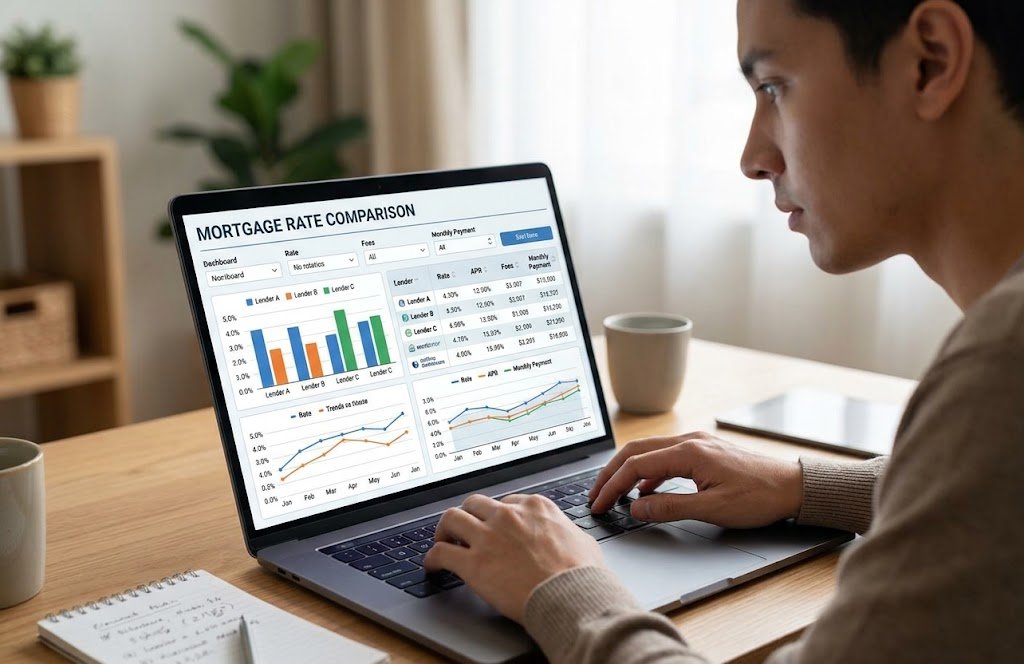
What Are Online Mortgage Lenders?
Online mortgage lenders are companies that provide home loans through digital platforms instead of relying mainly on traditional branch-based services. They allow borrowers to complete most mortgage steps online, including rate checks, applications, document uploads, and loan tracking.
Unlike traditional banks, online lenders often use technology to simplify the mortgage process. Borrowers can usually check estimated rates within minutes, receive digital loan recommendations, and communicate with mortgage professionals through online portals, email, or phone.
Online mortgage lenders may offer many of the same loan products available through traditional lenders, including:
- Conventional mortgages
- FHA loans
- VA loans
- USDA loans
- Jumbo loans
- Refinance options
The main difference is the way the service is delivered. Online lenders focus on convenience, automation, and faster communication.
Guide to different types of mortgage loans
How Online Mortgage Lenders Work
The online mortgage process generally follows these steps:
- Rate comparison: Borrowers enter basic information to view estimated mortgage rates.
- Application submission: Personal, financial, and property details are provided online.
- Underwriting process: The lender reviews the borrower’s financial profile.
- Loan approval and closing: After approval, borrowers complete final paperwork and close the loan.
- Document verification: Income records, bank statements, and identification documents are uploaded digitally.
Many online lenders use automated systems to speed up early approval steps, but human mortgage specialists are still involved during important stages.
Benefits of Using Online Mortgage Lenders
Online mortgage lenders offer several advantages for modern homebuyers:
Faster Application Process
Digital applications can reduce paperwork and allow borrowers to complete forms at their own pace. Some lenders provide preapproval decisions much faster than traditional processes.
Easy Rate Comparison
Borrowers can compare multiple offers without contacting every lender individually. This makes it easier to understand available interest rates and loan terms.
Convenient Document Management
Most online lenders allow secure uploading of documents, electronic signatures, and online loan tracking.
Greater Accessibility
Homebuyers can access mortgage information from anywhere, making the process easier for people with busy schedules
How to Compare Online Mortgage Lenders for the Best Rates
Finding the lowest advertised rate is not the only factor when choosing a mortgage lender. A good comparison should include interest rates, fees, loan terms, and customer experience.
Compare Mortgage Interest Rates and APR
The interest rate affects your monthly mortgage payment, but the annual percentage rate (APR) provides a broader picture because it includes certain lender fees and costs.
When comparing lenders, check:
- Fixed vs adjustable rates
- 15-year vs 30-year mortgage terms
- APR differences
- Discount points
- Closing costs
A lender offering a slightly lower rate may not always be cheaper if it charges higher fees.
Review Loan Terms, Fees, and Closing Costs
Mortgage costs include more than the interest rate. Before choosing an online lender, review:
- Origination fees
- Application fees
- Processing charges
- Closing costs
- Prepayment penalties, if applicable
A transparent lender clearly explains all charges before you commit.
Check Lender Reputation and Customer Reviews
Customer feedback can provide insight into the lender’s communication, speed, and problem-solving ability.
Look for:
- Verified customer reviews
- Complaint history
- Industry reputation
- Availability of mortgage specialists
A smooth digital platform is helpful, but strong customer support is equally important during a major financial decision.
Mortgage lender reviews and comparison guide
Types of Mortgage Loans Available From Online Lenders
One of the biggest advantages of online mortgage lenders is that borrowers can access different loan programs based on their financial goals, credit profile, and homeownership plans. Understanding these options helps buyers choose a mortgage that fits their situation instead of selecting a loan only because of a low advertised rate.
Conventional Loans
Conventional mortgages are among the most common loan options offered by online mortgage lenders. These loans are not insured or guaranteed by the federal government and usually require borrowers to meet specific credit, income, and down payment requirements.
They are often suitable for buyers with stable income and good credit scores. Many conventional loans offer flexible terms, including 15-year and 30-year repayment options.
FHA, VA, and USDA Loans
Government-backed loans can make homeownership more accessible for eligible borrowers.
FHA loans are designed for buyers who may have lower credit scores or smaller down payments. They are commonly used by first-time homebuyers.
VA loans are available to eligible veterans, active-duty service members, and certain military families. These loans may offer benefits such as competitive rates and reduced upfront costs.
USDA loans help eligible buyers purchase homes in qualifying rural and suburban areas. They may provide low or no down payment options for qualified applicants.
Many online mortgage lenders provide tools that help borrowers determine which government loan programs they may qualify for.
Jumbo Mortgage Loans
Jumbo loans are designed for properties that exceed conventional loan limits. These mortgages are commonly used for higher-priced homes and usually require stronger financial qualifications.
Borrowers considering jumbo loans should compare multiple online mortgage lenders because requirements and rates can vary significantly between providers.

What Makes the Best Online Mortgage Lenders Different?
The best online mortgage lenders combine competitive pricing with a smooth digital experience. While many companies offer similar mortgage products, the quality of service, technology, and transparency can make a major difference.
Fast Digital Preapproval Process
Preapproval gives buyers an estimate of how much they may be able to borrow before making an offer on a home.
Online lenders often simplify this process by allowing borrowers to:
- Enter financial details online
- Connect bank accounts securely
- Upload documents digitally
- Receive loan decisions faster
A faster preapproval process can help buyers act quickly when they find a suitable property.
Easy Online Application and Document Upload
A strong digital mortgage platform should make the application process simple. Borrowers should be able to:
- Complete forms online
- Upload income documents
- Check application status
- Review loan updates
A well-designed platform reduces confusion and keeps borrowers informed throughout the mortgage process.
Personalized Loan Options
Every borrower has different financial goals. The right online mortgage lender should provide options based on:
- Credit score
- Income level
- Down payment amount
- Desired monthly payment
- Long-term financial plans
Personalized recommendations help borrowers avoid choosing a loan that does not match their needs.
Transparent Pricing and Fees
Trustworthy lenders clearly explain costs before closing. Hidden fees can increase the total expense of a mortgage, so borrowers should always review the Loan Estimate provided by lenders.
The Consumer Financial Protection Bureau recommends comparing official Loan Estimates from multiple lenders before making a decision.
Online Mortgage Lenders vs Traditional Banks
Both online lenders and traditional banks provide mortgage services, but their approach is different. Understanding these differences helps borrowers decide which option works best for them.
Speed and Convenience
Online mortgage lenders usually focus on digital convenience. Borrowers can start applications, compare rates, and manage documents without visiting a branch.
Traditional banks may offer face-to-face meetings, which some buyers prefer when they need personal guidance.
Mortgage Rates and Fees
Online lenders often have lower operating costs because they use digital systems instead of maintaining large branch networks. These savings may sometimes result in competitive mortgage rates.
However, borrowers should compare the complete loan offer, including fees and closing costs, rather than looking only at the interest rate.
Customer Support Experience
Some borrowers prefer online communication, while others want direct conversations with a mortgage specialist.
Before selecting a lender, consider:
- Phone support availability
- Online chat options
- Response times
- Access to loan professionals
A strong lender provides both efficient technology and reliable human support.
Steps to Choose the Right Online Mortgage Lender
Choosing a mortgage lender requires research and careful comparison. Following a structured process can help borrowers avoid costly mistakes.
Check Your Credit Score and Budget
Before comparing lenders, understand your financial position.
Review:
- Credit score
- Monthly income
- Existing debts
- Available down payment
- Expected monthly housing costs
A stronger financial profile may help borrowers qualify for better rates.
Never rely on the first offer you receive. Comparing multiple online mortgage lenders can help you identify differences in:
Compare Multiple Mortgage Offers
- Interest rates
- Loan terms
- Fees
- Closing costs
- Customer service
Even a small rate difference can create significant savings over the life of a mortgage.
Review the Loan Estimate Carefully
A Loan Estimate provides important details about the mortgage, including:
- Interest rate
- Monthly payment
- Closing costs
- Estimated taxes and insurance
Reviewing this document carefully helps borrowers understand the real cost of the loan.
Select the Lender That Fits Your Needs
The cheapest option is not always the best option. Consider the overall experience, including communication, flexibility, and loan features.
A lender that provides clear answers and reliable support can make the home-buying process much easier.
First-time homebuyer mortgage checklist
Common Mistakes When Choosing Online Mortgage Lenders
Choosing the right mortgage lender is a major financial decision. While online mortgage lenders make the process easier, borrowers can still make mistakes that increase costs or create unnecessary stress. Understanding these common mistakes can help you make a more informed choice.
Choosing Only Based on the Lowest Rate
A low interest rate may look attractive, but it should not be the only factor when comparing mortgage lenders. Some lenders advertise low rates but may charge higher fees, stricter requirements, or additional costs.
Before accepting an offer, compare the complete loan package, including:
- Interest rate
- APR
- Closing costs
- Origination fees
- Loan terms
- Customer support quality
The lowest rate does not always mean the lowest overall cost.
Ignoring Hidden Fees
Mortgage expenses include more than the monthly payment. Some borrowers focus only on the rate and overlook additional charges.
Common mortgage fees may include:
- Processing fees
- Underwriting fees
- Appraisal costs
- Title services
- Closing expenses
Reliable online mortgage lenders clearly explain these costs before you move forward.
Not Comparing Different Loan Options
Many borrowers choose the first mortgage option they see without exploring alternatives. Different loan programs may provide better benefits depending on your situation.
For example:
- A first-time buyer may benefit from an FHA loan.
- A veteran may qualify for VA loan advantages.
- A buyer purchasing an expensive property may need a jumbo mortgage.
Comparing different loan products helps you select the option that matches your financial goals.
How Much Can You Save by Comparing Online Mortgage Lenders?
Comparing online mortgage lenders can potentially save borrowers thousands of dollars over the life of a loan. Mortgage rates, fees, and loan conditions vary between providers, so shopping around is an important step.
For example, consider a borrower taking a $350,000 30-year mortgage. A difference of only 0.25% in interest rate can change the monthly payment and may result in significant savings over the entire repayment period.
The exact savings depend on factors such as:
- Loan amount
- Credit score
- Down payment
- Market conditions
- Loan term
- Lender fees
This is why borrowers should request quotes from multiple lenders instead of accepting the first available offer.
Example of Comparing Two Mortgage Offers
Imagine two online mortgage lenders provide these offers:
Lender A
- Interest rate: 6.50%
- Lower upfront fees
- Standard closing costs
Lender B
- Interest rate: 6.25%
- Higher lender fees
Although Lender B offers a lower rate, the borrower should calculate the total cost to determine which option provides better value.
A complete comparison helps avoid decisions based only on one number.
Why Small Rate Differences Matter Over Time
Mortgage loans often last for decades. Even a small difference in interest rate can affect:
- Monthly payments
- Total interest paid
- Long-term financial planning
Using mortgage calculators and comparing official loan estimates can help buyers understand the real impact of different offers.
Mortgage payment calculator guide
Frequently Asked Questions About Online Mortgage Lenders
What are online mortgage lenders?
Online mortgage lenders are digital companies that provide home loans through online platforms. They allow borrowers to compare rates, apply for mortgages, submit documents, and manage loan progress digitally without visiting a physical branch.
Are online mortgage lenders safe?
Yes, many online mortgage lenders use secure technology, encryption, and regulated lending practices to protect borrower information. Before choosing a lender, check licensing information, customer reviews, and industry reputation.
How do online mortgage lenders offer lower rates?
Some online mortgage lenders may offer competitive rates because digital platforms reduce operating expenses compared with traditional branch-based lenders. However, borrowers should compare the complete loan offer, including fees and terms.
What credit score is needed for an online mortgage lender?
Credit score requirements vary depending on the lender and loan program. Conventional loans often require stronger credit profiles, while government-backed options like FHA loans may have more flexible requirements for eligible borrowers.
How long does online mortgage approval take?
The timeline depends on the lender, borrower documentation, and loan complexity. Some online lenders provide faster preapproval, but final approval requires verification of income, assets, property details, and other information.
Conclusion: Finding the Best Online Mortgage Lender for Your Home
Online mortgage lenders have made the home loan process more accessible by allowing borrowers to compare rates, explore loan options, and complete many mortgage steps digitally. However, choosing the right lender requires more than selecting the lowest advertised rate.
The best approach is to compare multiple lenders, review loan terms carefully, understand all fees, and choose a provider that offers both competitive pricing and reliable support.
Whether you are buying your first home, refinancing an existing mortgage, or looking for a specialized loan program, researching online mortgage lenders can help you make a more confident financial decision.
Start by comparing available mortgage options, reviewing your financial goals, and selecting a lender that matches your needs.