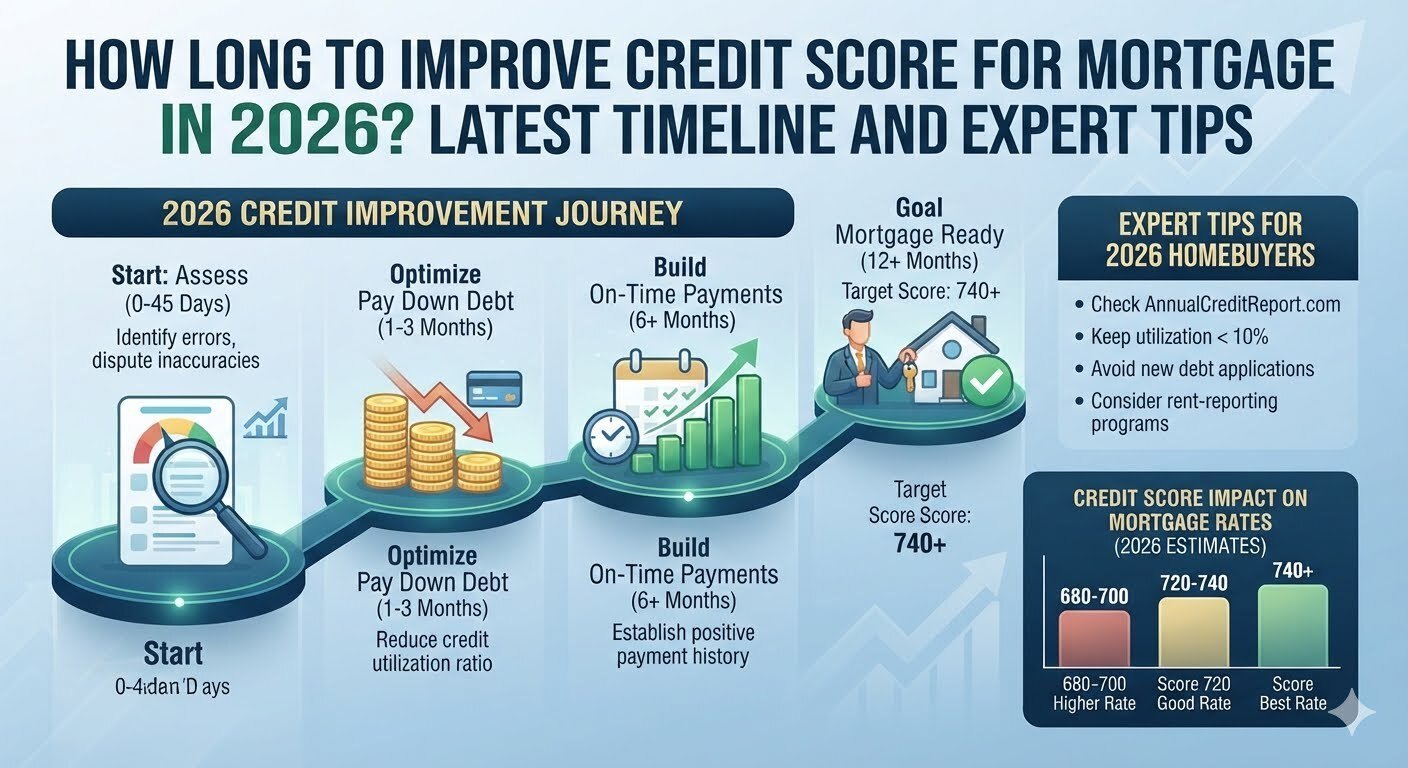
Learn how long it takes to improve your credit score for a mortgage in 2026. Discover proven strategies, timelines, and tips to qualify for better home loan rates.
How Long to Improve Credit Score for Mortgage in 2026?

Buying a home is one of the biggest financial decisions you will ever make. Your credit score plays a major role in determining whether you qualify for a mortgage and what interest rate you receive. If your score is lower than you would like, you may wonder how long it takes to improve it before applying for a home loan.
The answer depends on your current credit profile, the changes you make, and how lenders evaluate your financial history. While some improvements can appear within a month, significant gains often require several months of responsible credit management.
This guide explains realistic timelines, proven strategies, and what you can do today to strengthen your mortgage application in 2026.
Why Your Credit Score Matters for a Mortgage

Mortgage lenders use your credit score to estimate the risk of lending you money. A stronger score often means:
- Lower mortgage interest rates
- Better loan choices
- Smaller monthly payments
- Easier loan approval
- More negotiating power with lenders
Even improving your score by a small amount can save thousands of dollars over the life of your mortgage.
Credit Score Ranges for Mortgage Approval
While lender requirements vary, these general ranges are common.
Excellent Credit
- 760 and above
- Best mortgage rates
- More loan choices
Very Good Credit
- 700 to 759
- Competitive interest rates
- Strong approval chances
Good Credit
- 680 to 699
- Qualifies for many mortgage programs
Fair Credit
- 620 to 679
- May qualify for conventional or government backed loans depending on lender requirements
Lower Credit
- Below 620
- Some government loan programs may still be available, but approval requirements become stricter.
How Long Does It Take to Improve Your Credit Score?
The timeline depends on your financial situation.
One Month
You may notice small improvements if you:
- Pay all bills on time
- Reduce credit card balances
- Correct reporting errors
- Avoid applying for new credit
Three Months
Many borrowers see meaningful improvement after three months of consistent financial habits. This includes:
- Lower credit utilization
- Perfect payment history
- Paying down outstanding debt
Six Months
For people rebuilding their credit, six months often produces stronger results. Lenders also like seeing consistent financial behavior over time.
Twelve Months or More
If your credit has serious issues such as missed payments, collections, or bankruptcy, it can take a year or longer to rebuild a strong mortgage profile.
Factors That Affect How Fast Your Credit Improves
Payment History
Making every payment on time has the biggest impact on your credit score. Even one missed payment can slow your progress.
Credit Card Balances
Keeping balances low compared to your available credit helps improve your score faster.
Many experts recommend using less than thirty percent of your available credit. Even lower utilization may provide additional benefits.
Credit History
Older accounts generally strengthen your credit profile. Avoid closing long standing accounts unless necessary.
New Credit Applications
Each new credit application may slightly reduce your score. Apply for new credit only when needed.
Credit Report Errors
Incorrect information can lower your score unfairly. Review your reports regularly and dispute any errors.
Best Ways to Improve Your Credit Score Before Applying for a Mortgage
Pay Every Bill on Time
Payment history is one of the most important factors used in credit scoring.
Set automatic payments or reminders to avoid late payments.
Reduce Credit Card Debt
Pay down balances as much as possible before applying for a mortgage.
Lower balances improve your credit utilization ratio.
Avoid New Debt
Do not finance furniture, vehicles, or expensive purchases before applying for a mortgage.
Lenders prefer stable finances.
Check Your Credit Reports
Review your credit reports carefully for mistakes or outdated information.
Correcting errors may improve your score faster than expected.
Keep Older Accounts Open
Long credit history can benefit your score.
Closing older accounts may reduce your average account age.
Become an Authorized User
If appropriate, being added to a family member’s well managed credit card account may help strengthen your credit history.
Can You Improve Your Credit Score Quickly?
Yes, but results depend on your circumstances.
Some people see noticeable improvement within thirty to sixty days after paying down large credit card balances or correcting reporting errors.
However, rebuilding credit after missed payments or collections usually requires patience and consistent financial habits.
Avoid companies promising instant credit repair because legitimate improvements take time.
When Should You Apply for a Mortgage?
If you plan to buy a home in 2026, start preparing several months before applying.
This gives you time to:
- Improve your credit score
- Save for a down payment
- Reduce existing debt
- Organize financial documents
- Compare mortgage lenders
Planning ahead often leads to better loan terms and lower monthly payments.
Tips for First Time Home Buyers
If this is your first home purchase, remember these simple tips.
Build Your Savings
A larger down payment may reduce your monthly payment and improve your loan options.
Keep Stable Employment
Lenders value consistent income and employment history.
Avoid Large Financial Changes
Do not change jobs, open multiple credit accounts, or make expensive purchases before closing on your mortgage.
Work With a Mortgage Professional
An experienced mortgage advisor can review your financial situation and help you understand which loan programs may fit your needs.
Conclusion
Improving your credit score for a mortgage is not an overnight process, but it is one of the smartest financial steps you can take before buying a home. Small improvements may appear within one or two months, while larger gains often require three to twelve months of consistent financial responsibility.
By paying bills on time, reducing debt, avoiding unnecessary credit applications, and reviewing your credit reports regularly, you can improve your chances of qualifying for better mortgage rates in 2026.
Start today, stay consistent, and your future home purchase could become more affordable and less stressful.
Frequently Asked Questions
How long does it take to improve a credit score for a mortgage?
Many people see small improvements within one to three months, while significant increases often take six to twelve months depending on their credit history.
What credit score is good for a mortgage in 2026?
Many lenders consider a score of 620 or higher for conventional loans, while higher scores usually qualify for better interest rates.
Can paying off credit cards improve my mortgage approval chances?
Yes. Lower credit card balances can improve your credit utilization and strengthen your mortgage application.
Should I apply for new credit before buying a home?
It is usually better to avoid new credit applications before applying for a mortgage because they can temporarily lower your credit score.
Can errors on my credit report affect my mortgage?
Yes. Incorrect information may reduce your credit score, so reviewing and correcting your credit reports is important.
Is it possible to buy a home with fair credit?
Yes. Some loan programs are available for borrowers with fair credit, although interest rates and requirements may vary.
Does checking my own credit score lower it?
No. Checking your own credit report or score does not reduce your credit score.