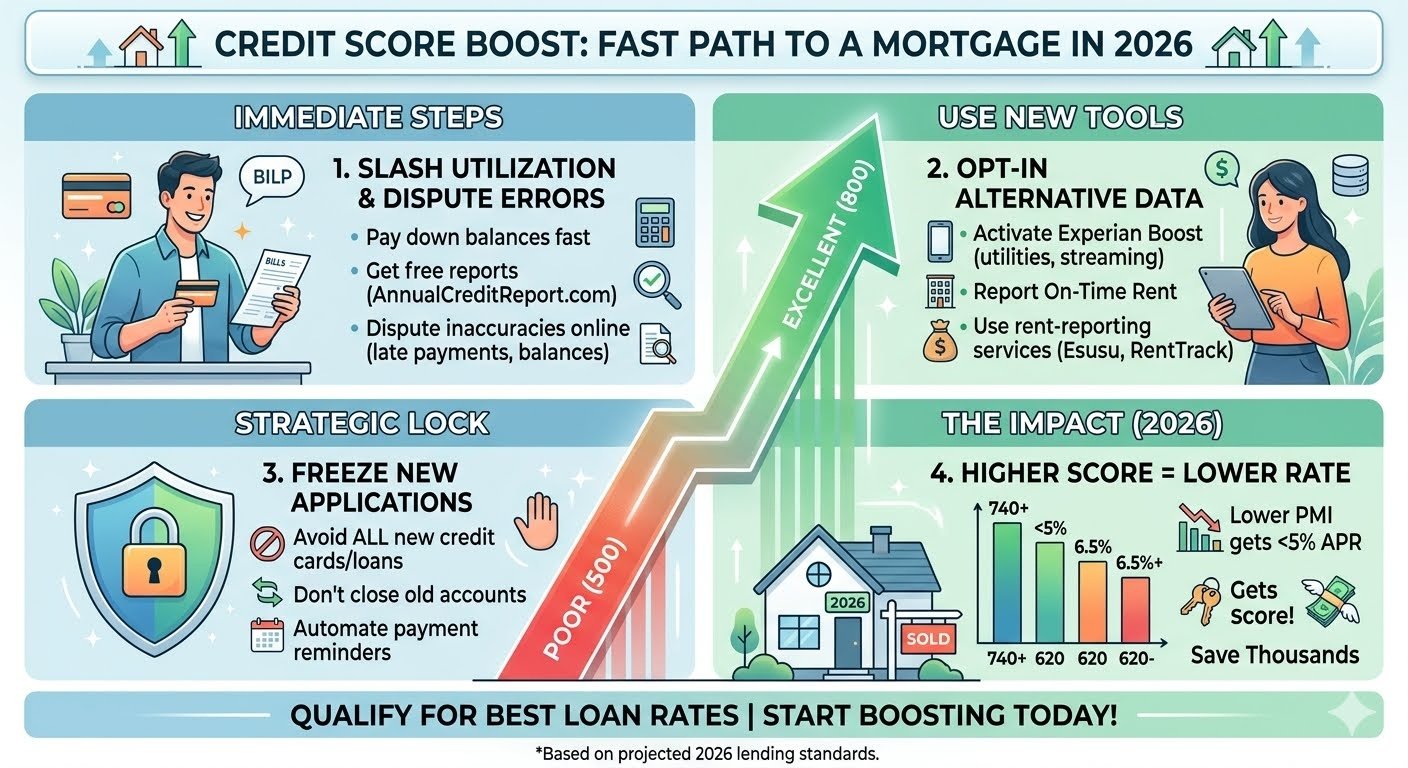
Learn how to improve your credit score fast for a mortgage in 2026. Discover proven tips to boost your score and qualify for lower mortgage rates.
How to Improve Credit Score Fast for Mortgage 2026

Buying a home is one of the biggest financial decisions you will ever make. Before applying for a mortgage, lenders look closely at your credit score to determine your eligibility and interest rate. A higher credit score can help you secure better loan terms and save thousands of dollars over the life of your mortgage.
If you plan to buy a home in 2026, now is the perfect time to improve your credit score. The good news is that many borrowers can see meaningful improvements within a few months by following the right strategies.
This guide explains how to improve your credit score fast for a mortgage and increase your chances of loan approval.
Why Your Credit Score Matters for a Mortgage
Your credit score helps lenders evaluate how responsibly you manage debt.
A stronger score can provide:
- Lower mortgage interest rates
- Higher loan approval chances
- Better loan options
- Lower monthly payments
- Greater borrowing power
Even a small increase in your credit score can make a significant difference when applying for a home loan.
What Credit Score Do You Need for a Mortgage in 2026?
Mortgage requirements vary by lender and loan type.
Conventional Loans
Most lenders prefer credit scores of 620 or higher.
FHA Loans
Many FHA borrowers qualify with scores as low as 580.
VA Loans
VA loans often offer flexible credit requirements for eligible borrowers.
Jumbo Loans
These loans typically require higher credit scores because of larger loan amounts.
The higher your score, the better your chances of receiving favorable mortgage terms.
Check Your Credit Report First
Before trying to improve your score, review your credit report carefully.
Look for:
- Incorrect account information
- Late payments reported in error
- Duplicate accounts
- Fraudulent activity
- Outdated negative items
Disputing inaccurate information can sometimes produce a quick credit score increase.
Pay Down Credit Card Balances
One of the fastest ways to improve your credit score is reducing credit card balances.
Understand Credit Utilization
Credit utilization measures how much of your available credit you are using.
For example:
- Credit limit: $10,000
- Balance: $5,000
- Utilization: 50 percent
Most experts recommend keeping utilization below 30 percent.
Lower utilization often leads to noticeable score improvements.
Focus on High Balance Cards
Paying down cards with the highest balances first can create the greatest impact.
Make Every Payment on Time
Payment history is one of the most important factors affecting your credit score.
Set Up Automatic Payments
Automatic payments help prevent missed due dates.
Pay More Than the Minimum
Paying more than the minimum balance can reduce debt faster and improve your financial profile.
Consistent on time payments demonstrate responsible credit management.
Avoid Applying for New Credit
When preparing for a mortgage, avoid opening new credit accounts unless absolutely necessary.
New applications can:
- Create hard inquiries
- Lower your average account age
- Increase perceived risk
Mortgage lenders prefer stability before loan approval.
Keep Old Credit Accounts Open
Many borrowers mistakenly close old accounts after paying them off.
Keeping older accounts open can:
- Increase available credit
- Improve utilization ratios
- Strengthen credit history
Unless an account has costly fees, keeping it active may benefit your score.
Become an Authorized User
If a trusted family member has strong credit habits, becoming an authorized user on their account may help improve your credit profile.
Potential benefits include:
- Longer credit history
- Lower utilization
- Positive payment history
Not all lenders treat authorized user accounts equally, but they can still provide value.
Pay Collection Accounts When Appropriate
Collection accounts can hurt your mortgage application.
Before making payments, discuss options with a mortgage professional or credit specialist.
Some collection accounts may be updated after payment, potentially helping your overall credit profile.
Increase Your Credit Limits
Another strategy for lowering utilization is requesting higher credit limits.
If approved, your utilization percentage decreases without additional spending.
Example:
- Credit limit: $5,000
- Balance: $2,000
- Utilization: 40 percent
After limit increase:
- Credit limit: $10,000
- Balance: $2,000
- Utilization: 20 percent
Lower utilization often supports better credit scores.
Avoid Major Financial Changes Before Mortgage Approval
Lenders review your financial stability throughout the mortgage process.
Avoid:
- Opening new credit cards
- Financing vehicles
- Taking personal loans
- Missing payments
- Making large unexplained deposits
Stable finances improve mortgage approval chances.
Build Positive Credit History
If your credit history is limited, focus on establishing positive payment records.
Options may include:
- Secured credit cards
- Credit builder loans
- Authorized user accounts
Building positive history takes time but can produce lasting results.
How Long Does It Take to Improve a Credit Score?
The timeline depends on your situation.
Fast Improvements
Some borrowers see results within 30 to 60 days after lowering credit card balances or correcting report errors.
Moderate Improvements
Three to six months often allows enough time for payment history and utilization improvements to appear.
Significant Improvements
Major credit rebuilding may take a year or longer.
Starting early provides the best opportunity to qualify for favorable mortgage rates.
Common Credit Mistakes to Avoid
Many borrowers unintentionally hurt their scores.
Avoid these mistakes:
- Missing payments
- Maxing out credit cards
- Applying for multiple loans
- Closing old accounts
- Ignoring credit report errors
- Co signing unnecessary loans
Small mistakes can delay mortgage approval and increase borrowing costs.
Frequently Asked Questions
How fast can I improve my credit score for a mortgage?
Many borrowers see improvements within one to three months by reducing credit card balances and correcting report errors.
What credit score is considered good for a mortgage?
Generally, scores above 700 provide access to better mortgage rates and loan terms.
Does paying off credit cards improve my score?
Yes. Lower balances reduce utilization and can improve your score quickly.
Should I close paid off credit cards?
In most cases, keeping older accounts open helps maintain a stronger credit profile.
How many points can my score increase in 30 days?
Results vary, but some borrowers experience increases of 20 to 100 points depending on their situation.
Can I get a mortgage with fair credit?
Yes. FHA and certain government backed loans may offer options for borrowers with fair credit.
Do mortgage lenders check credit more than once?
Many lenders review credit during both preapproval and final loan approval stages.
Conclusion
Improving your credit score fast for a mortgage in 2026 is possible with the right approach. Paying down credit card balances, making on time payments, correcting credit report errors, and avoiding new debt can help strengthen your credit profile before applying for a home loan.
The earlier you start, the more opportunities you have to qualify for lower mortgage rates and better financing options. A stronger credit score can save you money and make your path to homeownership much smoother.