Compare HELOC vs Home Equity Loan in 2026. Learn the key differences, interest rates, benefits, risks, and choose the best option for your needs.
HELOC vs Home Equity Loan 2026: Which Is Better for You Today?
If you own a home and need extra money, you may be thinking about using your home equity. Two of the most popular choices are a HELOC and a Home Equity Loan. Both allow you to borrow against the value of your home, but they work in different ways.
So which one is the better choice in 2026?
The answer depends on your financial goals, how much money you need, and how you plan to spend it. In this guide, we explain everything you need to know about HELOC vs Home Equity Loan, including benefits, drawbacks, interest rates, repayment options, and how to choose the right one.
What Is a HELOC?
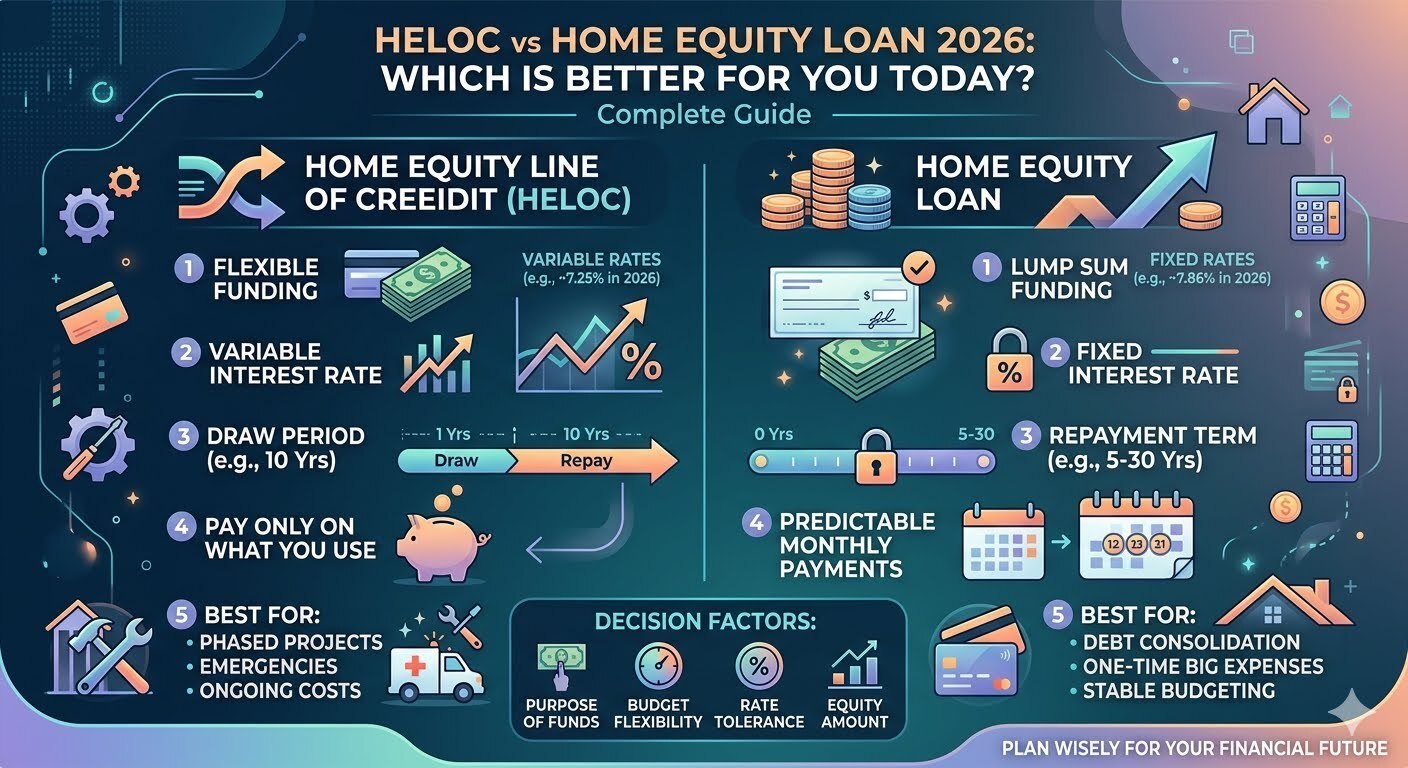
A Home Equity Line of Credit, also called a HELOC, lets homeowners borrow money as needed instead of receiving one large payment.
It works much like a credit card. Your lender approves a credit limit, and you borrow only what you need during the draw period.
Benefits of a HELOC
- Flexible borrowing
- Pay interest only on the amount you use
- Great for ongoing expenses
- Easy access to funds
- Useful for home improvements
Drawbacks
- Interest rates are often variable
- Monthly payments may increase
- Requires careful budgeting
What Is a Home Equity Loan?
A Home Equity Loan provides one lump sum payment after approval.
You receive all the money at once and repay it through fixed monthly payments over a set number of years.
Benefits of a Home Equity Loan
- Fixed interest rate
- Predictable monthly payments
- Easy budgeting
- Ideal for large one time expenses
Drawbacks
- Less flexible
- Interest is charged on the full loan amount
- Cannot borrow additional funds without applying again
HELOC vs Home Equity Loan: Key Differences
| Feature | HELOC | Home Equity Loan |
|---|---|---|
| Money Received | Borrow as needed | One lump sum |
| Interest Rate | Usually variable | Usually fixed |
| Monthly Payment | Can change | Fixed |
| Flexibility | High | Lower |
| Best For | Ongoing projects | Large planned expenses |
| Budgeting | Less predictable | More predictable |
When Should You Choose a HELOC?
A HELOC is usually the better choice if you need money over time instead of all at once.
Examples include:
- Home renovation projects
- College tuition paid each semester
- Emergency expenses
- Medical bills
- Business expenses
Since you borrow only what you use, you may save money if your expenses happen over several months or years.
When Should You Choose a Home Equity Loan?
A Home Equity Loan is often better when you know exactly how much money you need.
Examples include:
- Debt consolidation
- Major home remodeling
- Buying investment property
- Wedding expenses
- Large medical procedures
The fixed payment makes budgeting much easier.
Interest Rates in 2026
Interest rates continue to change based on market conditions and lender policies.
Generally:
HELOC
- Often starts with a lower rate
- Rate may increase later
- Monthly payment can change
Home Equity Loan
- Fixed interest rate
- Stable payment throughout repayment
- Easier long term planning
If you prefer predictable payments, a Home Equity Loan may offer greater peace of mind.
Which Option Costs Less?
The answer depends on several factors.
A HELOC can cost less if:
- You borrow only part of your credit line
- Interest rates remain low
- You repay quickly
A Home Equity Loan can cost less if:
- Interest rates rise
- You prefer fixed payments
- You need the full amount immediately
Always compare loan offers before making a decision.
Credit Score Requirements
Many lenders prefer:
- Credit score of 620 or higher
- Stable income
- Good payment history
- Low debt compared with income
- Enough home equity
Borrowers with stronger credit often qualify for lower interest rates.
How Much Can You Borrow?
Most lenders allow homeowners to borrow up to about 80 percent to 85 percent of their available home equity, depending on lender guidelines, credit profile, and financial history.
The exact amount depends on:
- Home value
- Remaining mortgage balance
- Credit score
- Income
- Overall financial profile
Pros and Cons
HELOC Pros
- Flexible borrowing
- Lower starting rates
- Interest charged only on funds used
- Great for long term projects
HELOC Cons
- Variable rates
- Payments may increase
- Requires financial discipline
Home Equity Loan Pros
- Fixed payment
- Fixed rate
- Easy budgeting
- Good for large purchases
Home Equity Loan Cons
- Less flexibility
- Interest charged on entire loan
- New application needed for additional borrowing
How to Choose the Right Option
Ask yourself these questions:
Do you need all the money today?
A Home Equity Loan may be the better fit.
Will you need money over time?
A HELOC may offer more flexibility.
Are you comfortable with changing interest rates?
If yes, a HELOC could work well.
Do you prefer predictable monthly payments?
A Home Equity Loan may provide greater stability.
Tips Before Applying
- Compare multiple lenders
- Check current interest rates
- Improve your credit score
- Understand all fees
- Borrow only what you truly need
- Read the loan agreement carefully
Internal Linking Suggestions
Link this article to related content such as:
- Current Mortgage Rates Today 2026
- Best Home Equity Loan Lenders
- HELOC Requirements Guide
- Cash Out Refinance vs HELOC
- How Home Equity Works
- Mortgage Refinance Guide
Conclusion
Choosing between a HELOC and a Home Equity Loan depends on your financial situation and borrowing needs.
A HELOC offers flexibility and works well for ongoing expenses or projects with uncertain costs. A Home Equity Loan provides a fixed amount with predictable monthly payments, making it ideal for planned expenses and borrowers who value stability.
Compare lenders, review current interest rates, and calculate your expected payments before deciding. Selecting the right option can help you use your home equity wisely while keeping your finances on track.
Frequently Asked Questions
Is a HELOC better than a Home Equity Loan?
A HELOC is better for flexible borrowing over time, while a Home Equity Loan is better for receiving one lump sum with fixed payments.
Which has lower interest rates in 2026?
HELOCs often begin with lower rates, but Home Equity Loans usually offer fixed rates that remain stable throughout the loan term.
Can I use either option for home improvements?
Yes. Both are commonly used for remodeling, repairs, and renovation projects.
Does a HELOC have fixed monthly payments?
No. Payments can change because interest rates are usually variable.
Can I pay off a Home Equity Loan early?
Many lenders allow early repayment, but always check for any prepayment fees before signing the agreement.
What credit score do I need?
Many lenders prefer a credit score of at least 620, although higher scores often qualify for better rates.
Is using home equity risky?
Yes. Since your home secures the loan, missing payments could put your home at risk. Borrow responsibly and make payments on time.