
Discover FHA Loan Requirements 2026 including credit score rules, down payment requirements, income qualifications, and mortgage insurance details.
FHA Loan Requirements 2026: Credit Score and Down Payment Guide
For many Americans, buying a home is a major life goal. However, saving for a large down payment or maintaining a perfect credit score can make the process seem difficult. Fortunately, FHA loans continue to help millions of home buyers achieve homeownership with more flexible qualification requirements.
If you are planning to purchase a home in 2026, understanding FHA loan requirements is essential. FHA loans offer lower credit score requirements, affordable down payment options, and flexible lending guidelines that make homeownership accessible to a wider range of borrowers.
This guide explains everything you need to know about FHA Loan Requirements 2026, including credit score requirements, down payment rules, income qualifications, debt limits, mortgage insurance, and eligibility guidelines.
What Is an FHA Loan?
An FHA loan is a mortgage insured by the Federal Housing Administration. The FHA does not lend money directly. Instead, it provides insurance to approved mortgage lenders.
This insurance reduces risk for lenders, allowing them to offer loans to borrowers who may not qualify for conventional financing.
FHA loans have become one of the most popular mortgage options for first time home buyers because they provide easier qualification standards and lower upfront costs.
Benefits of FHA Loans
- Low down payment requirements
- Flexible credit score standards
- Competitive mortgage rates
- Easier approval process
- Available to many first time buyers
- Flexible debt to income guidelines
These benefits make FHA loans attractive for buyers who may have limited savings or less than perfect credit.
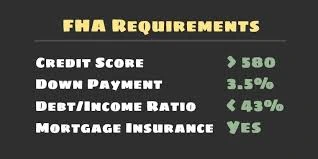
FHA Loan Requirements 2026 Overview
To qualify for an FHA mortgage in 2026, borrowers must meet several key requirements.
Basic FHA Loan Requirements
- Minimum credit score requirements
- Down payment requirement
- Stable employment history
- Verifiable income
- Acceptable debt to income ratio
- Primary residence occupancy
- FHA approved property
Meeting these guidelines can significantly improve your chances of approval.
FHA Credit Score Requirements 2026
One of the biggest advantages of FHA financing is the lower
credit score requirement compared to conventional mortgages.
Minimum Credit Score for FHA Loans
Most lenders follow these standards:
Credit Score of 580 or Higher
Borrowers with a credit score of 580 or above may qualify for the minimum down payment requirement of 3.5 percent.
Credit Score Below 580
Some borrowers with lower scores may still qualify, but they may need a larger down payment and additional lender review.
While FHA guidelines are flexible, many lenders establish their own standards that may be slightly stricter.
How Credit Scores Affect FHA Loans
A higher credit score can provide benefits such as:
- Better mortgage rates
- Lower monthly payments
- Easier approval
- More lender choices
Improving your credit score before applying can save thousands of dollars over the life of the loan.
FHA Down Payment Requirements 2026
The low down payment requirement is one of the main reasons FHA loans remain popular.
Minimum FHA Down Payment
Most qualified borrowers can purchase a home with a down payment of just 3.5 percent.
For example:
- Home price: $250,000
- Required down payment: $8,750
Compared to larger down payments required by some FHA Mortgage Brokers programs, FHA financing makes homeownership more affordable.
Where Can FHA Down Payment Funds Come From?
The FHA allows several sources of down payment funds.
These may include:
- Personal savings
- Gift funds from family members
- Down payment assistance programs
- Approved grants
- Certain employer assistance programs
This flexibility helps many buyers who are still building their savings.
FHA Income Requirements
Many people mistakenly believe FHA loans have minimum income requirements.
In reality, there is no specific income limit for FHA loans.
Instead, lenders evaluate whether you have sufficient income to manage monthly mortgage payments.
What Lenders Look For
Mortgage lenders generally review:
- Employment history
- Current income
- Income stability
- Future earning potential
- Existing debt obligations
Stable and consistent income is often more important than earning a specific amount.
FHA Employment Requirements
Employment history plays an important role in mortgage approval.
Employment Stability
Lenders generally prefer borrowers who have maintained steady employment for at least two years.
This does not necessarily mean working for the same employer. Career advancement and reasonable job changes are often acceptable.
Self Employed Borrowers
Self employed applicants can qualify for FHA loans, but they usually need additional documentation to verify income.
Examples may include:
- Tax returns
- Business records
- Profit and loss statements
FHA Debt to Income Ratio Requirements
Debt to income ratio measures how much of your monthly income goes toward debt payments.
Why Debt to Income Ratio Matters
Lenders use this ratio to determine whether you can comfortably afford a mortgage payment.
Common debts included in calculations are:
- Auto loans
- Student loans
- Credit card payments
- Personal loans
- Existing mortgages
Lower debt levels generally improve approval chances.
Improving Your Debt Ratio
Before applying for an FHA loan, consider:
- Paying down credit card balances
- Avoiding new loans
- Reducing monthly debt obligations
These steps can strengthen your mortgage application.
FHA Property Requirements
Not every home qualifies for FHA financing.
The property must meet certain safety, security, and habitability standards.
Eligible Property Types
Common eligible properties include:
- Single family homes
- Approved condominiums
- Townhomes
- Multi unit properties within FHA guidelines
- Manufactured homes meeting FHA standards
The property must generally serve as the borrower’s primary residence.
FHA Mortgage Insurance Requirements
All FHA loans require mortgage insurance.
Mortgage insurance helps protect lenders and supports the FHA lending program.
Upfront Mortgage Insurance Premium
Borrowers pay an upfront premium that may be included in the loan amount.
Annual Mortgage Insurance Premium
An annual premium is divided into monthly payments and added to the mortgage payment.
Although mortgage insurance increases monthly costs, it allows borrowers to qualify with smaller down payments and lower credit scores.
FHA Loan Limits 2026
FHA loan limits determine the maximum amount borrowers can finance through the program.
Loan limits vary based on:
- Geographic location
- Property type
- Local housing costs
Higher cost housing markets generally have larger FHA loan limits than lower cost areas.
Checking current FHA loan limits before shopping for a home is an important step.
How to Qualify for an FHA Loan in 2026
Preparing before applying can improve approval chances and reduce stress.
Review Your Credit Report
Check your credit report for errors and work on improving your score if needed.
Save for Your Down Payment
Even a small down payment requires planning and budgeting.
Reduce Existing Debt
Lower debt obligations can improve affordability calculations.
Gather Required Documents
Most lenders require:
- Tax returns
- Pay stubs
- Bank statements
- Employment records
- Identification documents
Compare Multiple Lenders
Mortgage rates and fees can vary significantly between lenders.
Comparing offers helps ensure you receive competitive terms.
Common FHA Loan Mistakes to Avoid
Applying Without Reviewing Credit
Checking your credit report early allows time to fix problems before applying.
Opening New Credit Accounts
New loans or credit cards can impact your debt ratio and approval chances.
Spending Savings Before Closing
Maintain sufficient funds for closing costs and other home buying expenses.
Changing Jobs During Approval
Major employment changes can delay or complicate mortgage approval.
Who Should Consider an FHA Loan?
FHA financing may be ideal for:
- First time home buyers
- Buyers with lower credit scores
- Borrowers with limited savings
- Families seeking flexible qualification standards
- Buyers needing a smaller down payment
These loans continue to provide an important pathway to homeownership.
Frequently Asked Questions
What is the minimum credit score for an FHA loan in 2026?
Most borrowers need a credit score of at least 580 to qualify for the minimum down payment requirement.
How much is the FHA down payment in 2026?
Qualified borrowers may purchase a home with a down payment of 3.5 percent.
Do FHA loans require mortgage insurance?
Yes. FHA loans require both upfront and annual mortgage insurance premiums.
Can gift money be used for an FHA down payment?
Yes. Approved gift funds from eligible sources may be used.
Is there an income limit for FHA loans?
No. FHA loans do not have a specific income limit, but borrowers must demonstrate repayment ability.
Are FHA loans only for first time buyers?
No. Both first time and repeat home buyers may qualify.
Can self employed borrowers get FHA loans?
Yes. Self employed applicants may qualify if they provide sufficient income documentation.
Can FHA loans be refinanced later?
Yes. Many homeowners refinance when financial conditions improve.
Conclusion
Understanding FHA Loan Requirements 2026 can help you prepare for a successful home purchase. FHA loans remain one of the most accessible mortgage options available, offering flexible credit requirements, affordable down payments, and easier qualification standards than many conventional loan programs.
Before applying, review your credit, reduce unnecessary debt, save for your down payment, and compare multiple lenders. Taking these steps can improve your chances of approval and help you secure favorable mortgage terms.