What Is a Home Equity Loan? How It Works & Rates is one of the most common questions homeowners ask when they need access to extra funds without selling their property. A home equity loan allows homeowners to borrow money by using the value they have built in their home as collateral.
Unlike a traditional personal loan, a Home Equity Loan is connected directly to your property. The amount you can borrow usually depends on your home’s current value, your remaining mortgage balance, income, and credit profile.
Many homeowners use these loans for major expenses such as home improvements, debt consolidation, education costs, or emergency financial needs. However, because your home secures the loan, understanding the terms, interest rates, repayment process, and possible risks is important before making a decision.
In this guide, we will explain how home equity loans work, how rates are determined, eligibility requirements, advantages and disadvantages, and how they compare with other borrowing options.
Quick Answer: A Home Equity Loan is a type of secured loan that lets homeowners borrow against the equity they have built in their property. The borrower receives a lump sum amount and repays it with fixed monthly payments over an agreed period.

What Is a Home Equity Loan and How Does It Work?
A Home Equity Loan allows you to borrow money based on the portion of your home that you already own. Your home equity represents the difference between your property’s current market value and the amount you still owe on your mortgage.
Understanding Home Equity
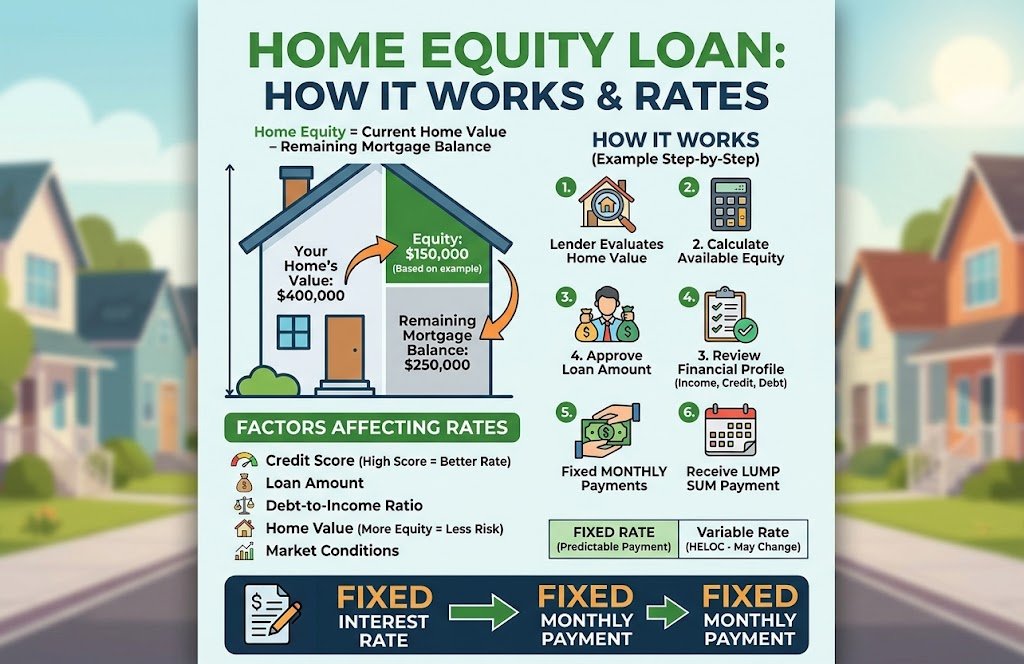
Home equity is calculated using this simple formula:
Home Equity = Current Home Value – Remaining Mortgage Balance
For example:
If your home is worth $400,000 and your remaining mortgage balance is $250,000:
$400,000 – $250,000 = $150,000 equity
A lender may allow you to borrow a percentage of this equity depending on your financial situation.
How a Home Equity Loan Works
A Home Equity Loan usually works in these steps:
- The lender evaluates your home value.
- Your mortgage balance and available equity are calculated.
- Your income, credit score, and debt levels are reviewed.
- The lender approves a loan amount.
- You receive a lump sum payment.
- You repay the loan through fixed monthly payments.
Unlike a credit card or HELOC, you do not repeatedly borrow money. You receive one amount upfront and repay it over time.
Complete Guide to Mortgage Loans
How Are Home Equity Loan Rates Determined?
Home equity loan rates depend on several factors, including market conditions and your personal financial profile.
Factors That Affect Home Equity Loan Interest Rates
The main factors include:
- Credit Score: Higher credit scores often qualify for better rates.
- Loan Amount: Larger loans may have different pricing.
- Debt-to-Income Ratio: Lower debt levels can improve approval chances.
- Home Value: More available equity may reduce lender risk.
- Market Interest Rates: Economic conditions influence borrowing costs.
Fixed vs Variable Interest Rates
Most Home Equity Loans come with fixed interest rates.
A fixed rate means:
- Your monthly payment remains predictable.
- Your interest rate does not change.
- Budgeting becomes easier.
This is different from many HELOC products, which often have variable rates.
According to the Federal Trade Commission, homeowners should carefully compare loan terms because using your home as collateral creates repayment obligations.
What Are the Requirements for a Home Equity Loan?
Before approving a Home Equity Loan, lenders review several requirements to determine whether you qualify.
Common Home Equity Loan Requirements
Most lenders consider:
Sufficient Home Equity
You need enough ownership value in your property. Many lenders require borrowers to maintain a certain amount of equity after taking the loan.
Good Credit History
A stronger credit profile may help you receive better loan terms.
Stable Income
Lenders want to confirm that you can comfortably manage monthly payments.
Low Debt-to-Income Ratio
Your existing debts compared with your income affect approval decisions.
Property Appraisal
The lender usually requires an appraisal to determine your home’s current market value.
What Can You Use a Home Equity Loan For?
One benefit of a Home Equity Loan is flexibility. Homeowners commonly use these funds for:
Home Renovations and Repairs
Many homeowners use equity loans for:
- Kitchen remodeling
- Bathroom upgrades
- Roof replacement
- Energy-efficient improvements
Improving your property may increase comfort and potentially add value.
Debt Consolidation
Some borrowers use home equity loans to combine high-interest debts into one lower-interest payment.
However, converting unsecured debt into debt secured by your home means your property becomes at risk if payments are not made.
Education Expenses
Some families use home equity funds to help cover education costs.
Major Life Expenses
Examples include:
- Medical expenses
- Business investments
- Emergency costs
What Are the Pros and Cons of a Home Equity Loan?
Like any financial product, Home Equity Loans have advantages and disadvantages.

Benefits of a Home Equity Loan
Fixed Monthly Payments
Because many home equity loans have fixed rates, payments remain predictable.
Lower Interest Rates
Secured loans often have lower rates compared with unsecured borrowing options.
Large Borrowing Amounts
Homeowners may access larger amounts compared with personal loans.
Possible Tax Benefits
In some situations, interest may be deductible if funds are used for qualifying home improvements. Always confirm current tax rules with a professional.
Risks of a Home Equity Loan
Your Home Is Collateral
Failure to repay the loan can put your home at risk.
Additional Monthly Payment
You must manage another monthly financial obligation.
Property Value Changes
If home prices decrease, your available equity may decline.
Home Equity Loan vs HELOC: What Is the Difference?
Many homeowners confuse Home Equity Loans with Home Equity Lines of Credit (HELOCs).
Home Equity Loan
- Receive money as one lump sum
- Usually fixed interest rate
- Fixed monthly payments
- Best for planned expenses
HELOC
- Works like a credit line
- Borrow money when needed
- Usually variable interest rates
- Better for ongoing expenses
Choosing between them depends on whether you need a specific amount of money or flexible access to funds.
Home Equity Loan vs HELOC Guide
Is a Home Equity Loan Right for You?
A Home Equity Loan may be suitable if:
- You have significant home equity.
- You need a large amount of money.
- You prefer predictable payments.
- You have stable income.
It may not be the right choice if:
- You struggle with monthly payments.
- You may sell your home soon.
- You are uncomfortable using your property as collateral.
Before applying, compare multiple lenders and understand all fees, repayment terms, and interest costs.
Frequently Asked Questions About Home Equity Loans
How much can you borrow with a Home Equity Loan?
The amount depends on your home’s value, mortgage balance, income, credit score, and lender requirements.
Does a Home Equity Loan affect your mortgage?
Yes. It creates a second loan secured by your home while your original mortgage continues separately.
Are Home Equity Loan rates fixed?
Many Home Equity Loans have fixed interest rates, but terms vary by lender.
Can you lose your home with a Home Equity Loan?
Yes. Since your home secures the loan, failure to repay may lead to foreclosure.
Conclusion
A Home Equity Loan can be a useful financial tool for homeowners who need access to funds while using the value they have built in their property. Understanding What Is a Home Equity Loan? How It Works & Rates helps you make informed decisions before borrowing.
Before applying, review your financial goals, compare lenders, understand interest costs, and make sure monthly payments fit your budget. A carefully planned Home Equity Loan can provide financial flexibility while protecting your long-term home ownership goals.