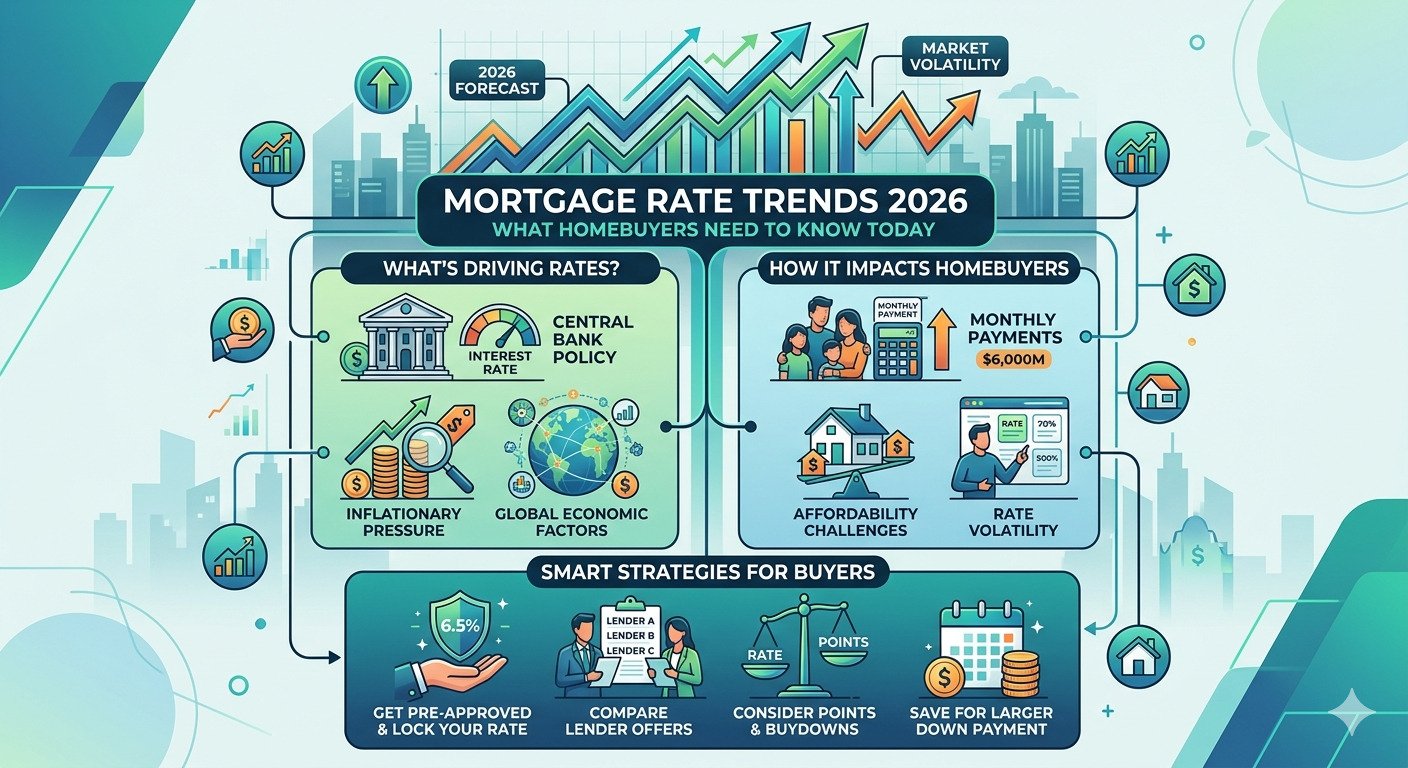
Discover Mortgage Rate Trends 2026, current home loan rates, market forecasts, and smart tips to help homebuyers secure the best mortgage today.
Mortgage Rate Trends 2026: What Homebuyers Need to Know

Buying a home is one of the biggest financial decisions you will ever make. One of the most important factors affecting your monthly payment is the mortgage interest rate. As we move through 2026, many homebuyers are asking whether mortgage rates will rise, fall, or remain stable.
Understanding mortgage rate trends can help you decide when to buy, refinance, or lock in a home loan. This guide explains the latest mortgage rate trends in 2026, what influences mortgage rates, and how buyers can prepare for today’s housing market.
What Are Mortgage Rates?
Mortgage rates are the interest rates lenders charge when you borrow money to purchase a home. The rate you receive determines how much interest you pay over the life of your mortgage.
Even a small change in interest rates can significantly affect your monthly mortgage payment and the total cost of your home.
Mortgage Rate Trends in 2026
Mortgage rates continue to respond to economic conditions throughout 2026. While rates have experienced periods of movement, many experts expect them to remain within a moderate range rather than returning to the historic lows seen several years ago.
Several economic factors continue to influence mortgage rates, including inflation, employment, consumer spending, and decisions made by the Federal Reserve.
Homebuyers should monitor market conditions regularly because mortgage rates can change daily.
What Affects Mortgage Rates?
Many factors influence mortgage interest rates.
Inflation
Higher inflation often leads to higher mortgage rates because lenders seek to maintain returns on long term loans.
Federal Reserve Policy
Although the Federal Reserve does not directly set mortgage rates, its interest rate decisions influence borrowing costs across the economy.
Economic Growth
A strong economy may increase mortgage rates, while slower economic growth may place downward pressure on rates.
Bond Market Performance
Mortgage rates often move with the bond market, especially the yield on United States Treasury securities.
Housing Market Demand
Strong demand for homes can influence lending activity and mortgage pricing.
Current Mortgage Rate Types
Homebuyers have several mortgage options to choose from.
Fixed Rate Mortgage
A fixed rate mortgage keeps the same interest rate throughout the loan term, providing predictable monthly payments.
Adjustable Rate Mortgage
An adjustable rate mortgage begins with a lower interest rate, but the rate can change later based on market conditions.
FHA Loans
FHA loans provide flexible qualification requirements and lower down payment options for eligible buyers.
VA Loans
VA loans offer valuable benefits for qualified military members and veterans.
USDA Loans
USDA loans help eligible buyers purchase homes in qualifying rural areas with little or no down payment.
How Mortgage Rates Affect Monthly Payments
Mortgage rates directly affect affordability.
For example, purchasing a home with a lower interest rate can reduce your monthly payment and save thousands of dollars over the life of the loan.
Higher rates may reduce your purchasing power because a larger portion of your payment goes toward interest.
Tips for Getting the Best Mortgage Rate
Improving your financial profile can help you qualify for a better mortgage rate.
Improve Your Credit Score
A higher credit score often results in lower interest rates.
Pay bills on time and reduce outstanding debt before applying.
Save for a Larger Down Payment
A larger down payment lowers lender risk and may qualify you for better loan terms.
Compare Multiple Lenders
Different lenders offer different rates and fees.
Shopping around can help you find the most competitive fha mortgage brokers.
Reduce Existing Debt
Lower debt improves your debt to income ratio, making you a stronger borrower.
Lock Your Interest Rate
If you find a favorable rate, consider locking it before market conditions change.
Should You Buy a Home in 2026?
Many buyers wonder whether they should wait for lower rates or purchase now.
Waiting may result in lower rates, but home prices could continue to increase in many markets.
Buying now may allow you to build home equity sooner. If rates decrease later, refinancing may become an option.
The best time to buy depends on your financial situation, employment stability, savings, and long term goals.
Refinancing in 2026
Homeowners who already have a mortgage may benefit from refinancing if interest rates become lower.
Refinancing may help you:
- Reduce monthly payments
- Lower your interest rate
- Shorten your loan term
- Access home equity
- Consolidate debt
Always compare refinancing costs with your expected savings before making a decision.
Common Mistakes Homebuyers Should Avoid
Avoid these mistakes when shopping for a mortgage.
- Applying for new credit before closing
- Changing jobs during the loan process
- Making large purchases
- Ignoring closing costs
- Failing to compare lenders
- Borrowing more than your budget allows
Planning ahead helps reduce stress and improves your chances of loan approval.
How to Prepare Before Applying
Getting organized before applying for a mortgage can save time.
Prepare these documents:
- Pay stubs
- Tax returns
- Bank statements
- Employment records
- Identification
- Credit information
Getting preapproved also gives you a clear picture of your buying budget.
Conclusion
Mortgage Rate Trends 2026 continue to shape the housing market for buyers across the country. While interest rates may change throughout the year, preparation remains the key to securing an affordable mortgage.
Improve your credit score, save for a down payment, compare several lenders, and stay informed about market conditions. With careful planning, you can confidently purchase a home that fits both your lifestyle and your budget.
Frequently Asked Questions
Are mortgage rates expected to fall in 2026?
Mortgage rates may fluctuate throughout the year depending on inflation, economic conditions, and lending markets. No outcome is guaranteed.
What credit score helps qualify for the best mortgage rates?
Borrowers with higher credit scores generally receive more competitive mortgage rates.
Should I lock my mortgage rate?
If you are satisfied with the current rate and plan to close soon, locking your rate may protect you from future increases.
Is refinancing worth it in 2026?
Refinancing may be beneficial if it lowers your interest rate, reduces your monthly payment, or helps achieve your financial goals.
Do mortgage rates change every day?
Yes. Mortgage rates can change daily based on market activity and economic conditions.
How can I improve my mortgage approval chances?
Improve your credit score, reduce debt, maintain stable income, and save for a larger down payment.
Does a larger down payment lower my interest rate?
In many cases, a larger down payment may help borrowers qualify for more favorable mortgage terms.