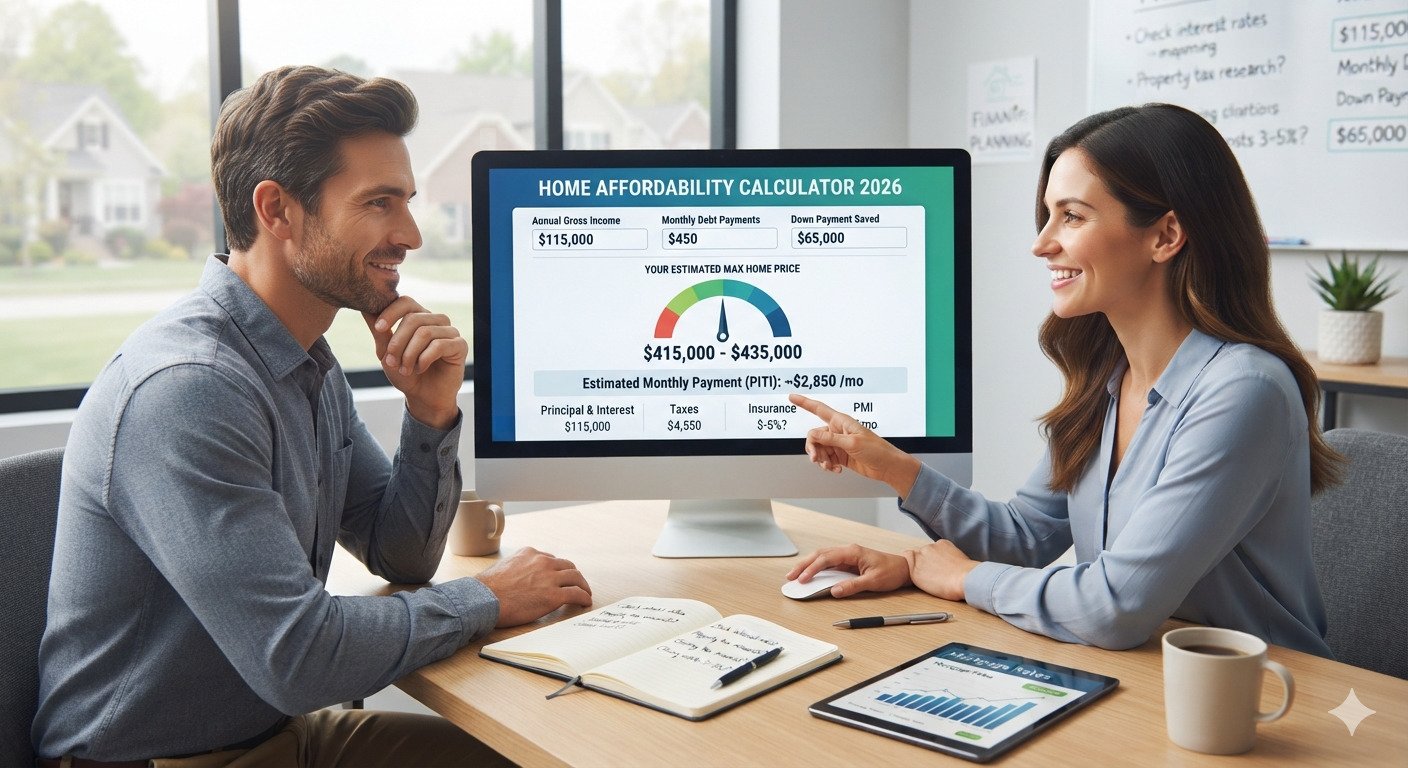
Find out how much house you can afford in 2026. Learn how income, debt, credit score, and down payment affect your home buying budget.
How Much House Can I Afford in 2026? Calculator Guide
Buying a home is one of the biggest financial decisions you will ever make. Before you start looking at listings, it is important to understand how much house you can truly afford. A realistic budget helps you avoid financial stress and gives you confidence throughout the buying process.
If you are asking, How Much House Can I Afford in 2026, this guide explains the key factors that determine your buying power. You will also learn how to estimate your monthly payment and use a home affordability calculator to plan your purchase wisely.
What Does House Affordability Mean?
House affordability is the amount you can comfortably spend on a home while keeping your monthly finances healthy. It depends on more than your salary alone.
Lenders review several financial details before approving your mortgage. They want to ensure you can manage your monthly payments without creating unnecessary financial risk.
Important factors include:
- Annual income
- Monthly debt payments
- Credit score
- Down payment amount
- Interest rate
- Loan term
- Property taxes
- Homeowners insurance
How Much House Can You Afford in 2026?
A simple guideline is to keep your total housing expenses within about 28 percent of your monthly gross income. Many lenders also review your total monthly debt compared with your income.
For example:
| Annual Income | Estimated Home Budget |
|---|---|
| $60000 | $220000 to $270000 |
| $80000 | $300000 to $360000 |
| $100000 | $380000 to $460000 |
| $150000 | $550000 to $700000 |
These estimates vary depending on your credit profile, down payment, and current mortgage rates.
Factors That Affect Your Home Buying Budget
Your Income
Your income is the starting point for determining affordability. Higher income generally allows you to qualify for a larger mortgage.
Income may include:
- Salary
- Bonuses
- Self employment income
- Retirement income
- Investment income
Down Payment
A larger down payment reduces the amount you need to borrow.
Benefits include:
- Lower monthly payments
- Better loan approval chances
- Lower interest costs
- Less mortgage insurance in many cases
Many loan programs allow smaller down payments, although larger amounts often improve affordability.
Credit Score
Your credit score has a major impact on your mortgage interest rate.
Higher credit scores usually qualify for:
- Lower interest rates
- Better loan programs
- Lower monthly payments
Improving your credit score before applying for a mortgage can save thousands of dollars over the life of the loan.
Monthly Debt
Lenders review your existing monthly obligations, including:
- Car loans
- Student loans
- Credit cards
- Personal loans
Lower debt often means you can qualify for a higher mortgage amount.
Mortgage Interest Rate
Even a small change in mortgage rates can significantly affect your monthly payment.
When rates increase:
- Monthly payments rise
- Buying power decreases
When rates fall:
- Monthly payments become more affordable
- Buyers may qualify for more expensive homes
Use a Home Affordability Calculator
A home affordability calculator gives you a quick estimate based on your personal finances.
Most calculators ask for:
- Annual income
- Monthly debt
- Down payment
- Loan term
- Interest rate
- Property taxes
- Insurance costs
The calculator estimates:
- Maximum home price
- Monthly mortgage payment
- Total housing costs
Remember that calculator results are estimates. A lender will provide a more accurate approval based on your complete financial profile.
Extra Costs You Should Not Forget
Many buyers focus only on the mortgage payment, but home ownership includes additional expenses.
Common costs include:
- Property taxes
- Homeowners insurance
- Mortgage insurance
- Homeowners association fees
- Utilities
- Home maintenance
- Repairs
Including these costs in your budget helps prevent financial surprises after moving into your new home.
Tips to Increase Your Home Buying Budget
If your current budget is lower than expected, there are several ways to improve your affordability.
Save a Larger Down Payment
A larger down payment reduces your loan amount and monthly payment.
Improve Your Credit Score
Pay bills on time and reduce outstanding balances before applying for a mortgage.
Reduce Existing Debt
Paying off credit cards or personal loans may improve your mortgage approval amount.
Increase Household Income
Additional income from a second job or another qualified borrower may increase your buying power.
Compare Mortgage Options
Different lenders offer different rates and loan programs. Comparing offers may help you find lower monthly payments.
Is Buying a Home in 2026 a Good Idea?
For many buyers, 2026 may present opportunities depending on mortgage rates, local home prices, and personal finances.
Buying makes sense if you:
- Have stable income
- Plan to stay in the home for several years
- Have emergency savings
- Can comfortably afford monthly payments
The right time to buy depends more on your financial readiness than trying to predict the housing market.
Conclusion
Understanding How Much House Can I Afford in 2026 is the first step toward successful home ownership. Income, debt, credit score, down payment, and mortgage rates all play an important role in determining your budget.
Before making an offer, use a home affordability calculator, compare mortgage options, and review your monthly expenses carefully. A realistic budget helps you purchase a home you can comfortably afford both today and in the years ahead.
Frequently Asked Questions
How much income do I need to buy a house in 2026?
The required income depends on home price, mortgage rate, debt, and down payment. Higher income generally increases your buying power.
What is the best home affordability calculator?
Many mortgage lenders and financial websites offer free home affordability calculators that estimate your buying budget based on your financial information.
Does my credit score affect how much house I can afford?
Yes. Higher credit scores often qualify for lower interest rates, which can increase the amount you can afford.
How much should I save for a down payment?
Many buyers save between 3 percent and 20 percent of the home price, depending on the loan program they choose.
Can I buy a home with existing debt?
Yes. Lenders consider your total monthly debt along with your income. Lower debt usually improves your approval chances.
Should I get preapproval before shopping for a home?
Yes. Mortgage preapproval gives you a clear budget and shows sellers that you are a serious buyer.
What monthly costs should I include besides the mortgage?
Include property taxes, homeowners insurance, mortgage insurance if required, utilities, maintenance, repairs, and any homeowners association fees.