

Mortgage Guider Hub Team
This collection is curated by the Mortgage Guider Hub Team, a group of mortgage writers publishing practical guides about home loans, refinancing, credit and insurance. Our team verifies every rate and rule before publishing, so you can make your mortgage decisions with confidence.
Does a personal loan hurt mortgage approval? Yes, it usually does, but how much it hurts depends on the size of the payment, your debt to income ratio, your credit score and, above all, the timing. A small personal loan taken a year before you apply, paid on time every month, may barely matter. The same loan taken a month before you apply, or worse, while your mortgage is already in underwriting, can shrink the amount you qualify for, raise your interest rate or even cost you the approval.
This guide explains exactly how a personal loan affects the three things mortgage underwriters care about most, how to calculate the damage before you borrow, when a personal loan can actually help, and what to do instead if you need cash while you are preparing to buy a home.
Does a Personal Loan Hurt Mortgage Approval Through Your DTI?
The main way a personal loan hurts a mortgage application is through your debt to income ratio, known as DTI. Your DTI is your total monthly debt payments divided by your gross monthly income, and it is the first number an underwriter looks at after your credit score. A personal loan adds a fixed monthly payment to the debts side of that calculation, so your DTI goes up the day the loan is opened.
In general, conventional loans require a DTI of 43 percent or less, though lenders typically prefer 36 percent or less. FHA loans allow higher ratios in many cases, but the principle is the same: every dollar of monthly debt is a dollar that cannot go toward your housing payment. Our guide to debt to income ratio and mortgage approval walks through the full calculation and the limits for each loan type.
The practical effect is a smaller mortgage. Lenders work backwards from the DTI limit: they calculate the total monthly payments your income supports, subtract what you already owe each month, and offer a mortgage based on what is left. A personal loan payment comes straight out of that leftover amount. Experian illustrates it with a simple example: on $6,000 a month of gross income with a lender cap of 43 percent, you have $2,580 a month for all debt payments. With $450 in existing car and card payments, $2,130 is left for housing. Add a $350 personal loan payment, and only $1,780 is left. That $350 a month can easily translate into tens of thousands of dollars less house.

How a Personal Loan Affects Your Credit Score
The second channel is your credit score, and here the damage is usually smaller and shorter lived, but it can still matter at the wrong moment. Applying for a personal loan triggers a hard inquiry on your credit reports, which may lower your score by a few points. Opening the new account can push it down a little further, because it lowers the average age of your accounts. Both effects are usually minor and temporary, and a personal loan paid on time can even help your score over a longer period by adding a successful installment tradeline and improving your credit mix.
The danger is timing. If you take the loan shortly before applying for a mortgage, the inquiry and the new account hit your score at the exact moment the lender pulls your credit. A missed payment on the personal loan is a different story entirely: one late payment can drop your score sharply, so if you already have a personal loan, paying it on time every single month is non negotiable while you prepare to buy.
If your score needs work before you apply, read our guide on how to improve your credit score fast before you take on any new debt.
What Lenders See When They Look at a Personal Loan
Underwriters do not just see a number. They see a tradeline on your credit reports showing the balance, the monthly payment, the payment status and the date the account was opened, and they ask what it means. A personal loan opened six months ago with a clean payment history tells one story. A personal loan opened three weeks ago, just before a mortgage application, tells another, and underwriters are trained to notice the difference.
A recent loan raises questions. Did you borrow the money for the down payment? Are you short of cash? Is there a financial problem the application does not show?
There is one use of a personal loan that underwriters watch especially closely: borrowing for a down payment. Most mortgage programs require the down payment to come from your own funds, savings or an acceptable gift, not from borrowed money that adds another monthly payment. FHA has specific rules here, and our sister site explains the issue in its article on using a personal loan for an FHA down payment. If you are short on down payment money, talk to your lender about assistance programs and gift rules before you borrow anything.
Does a Personal Loan Hurt Mortgage Approval During Underwriting?
The most dangerous moment to take a personal loan is after you have applied for a mortgage and before you close. Lenders typically check your credit a second time shortly before closing to confirm that your financial situation has not changed since preapproval. If a new personal loan appears on that second pull, the lender has to underwrite the loan again to see how the change to your DTI and credit score affects the terms it offered you.
The consequences can be serious. In the best case the lender reworks the numbers and you close a few days late. In the worst case the lender revises your interest rate upward, reduces the loan amount, or denies the loan altogether if the new payment pushes your DTI past its limit. This is why every mortgage lender tells borrowers the same thing after preapproval: do not open new credit, do not buy a car, do not take a personal loan, and do not co-sign anything until the keys are in your hand. The rule also applies to credit cards: opening a new store card for furniture before closing can have the same effect, and large purchases on an existing card raise your minimum payments and your DTI. Once you are under contract, treat your credit file as frozen until closing day.
When a Personal Loan Can Actually Help Your Mortgage
It would be wrong to say a personal loan always hurts, because there is one scenario where it can help: debt consolidation that genuinely lowers your total monthly payments. If you use a personal loan to pay off credit cards with high minimum payments, and the new fixed loan payment is clearly lower than the card minimums it replaces, your DTI can go down. The Mortgage Reports makes the key point plainly: the goal is to lower the monthly payments lenders count, not just to move debt around. If the new payment is similar to or higher than the payments it replaces, your DTI stays the same or gets worse, and the consolidation has bought you nothing.
Timing matters even here. A consolidation loan taken a year before you apply, with a clean payment record since, can leave you in a stronger position. The same consolidation taken a month before you apply still carries the new inquiry, the new account and the underwriter questions, and the benefit may not be visible yet. So the rule is not never consolidate, it is consolidate early, only when the monthly payment clearly falls, and never while a mortgage application is live.
How Much Can a Personal Loan Hurt? Work the Numbers Yourself
Before you borrow, do the DTI math yourself. It takes five minutes and it removes the guesswork. First, add up every monthly debt payment a lender counts: credit card minimums, auto loans, student loans, any existing personal loans, alimony or child support, and the payment on the loan you are considering. Second, divide that total by your gross monthly income before taxes. Third, compare the result with the limits: 36 percent is the comfortable zone most lenders prefer, and 43 percent is the common ceiling for conventional loans.
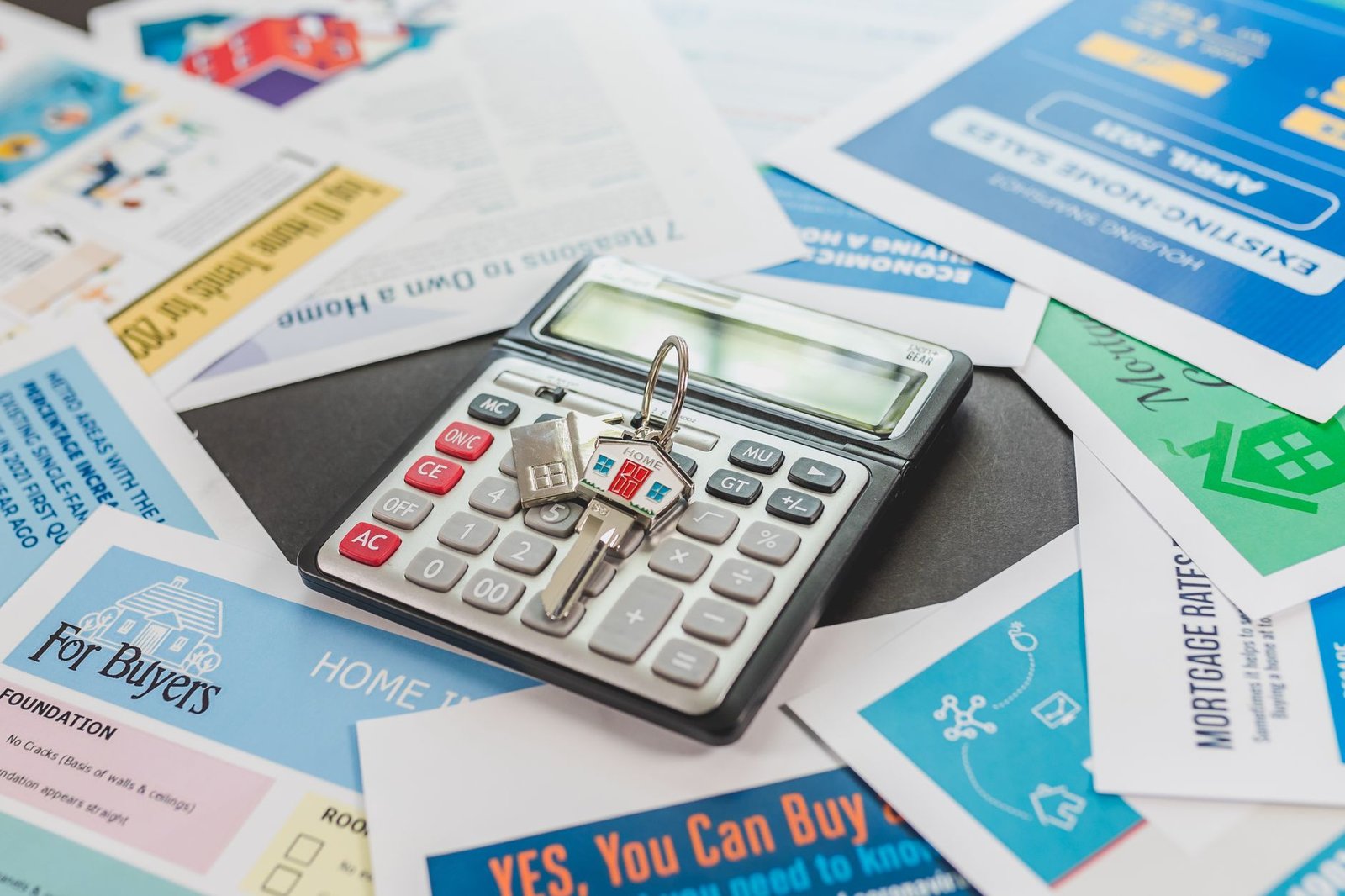
Then test the mortgage you want. Take your gross monthly income, multiply it by 0.43, and subtract your total monthly debts including the personal loan payment. What is left is roughly the maximum monthly housing payment a conventional lender would support. Compare that with the mortgage payment, taxes, insurance and mortgage insurance on the home you want. If the personal loan pushes the leftover amount below the housing payment, the loan is too big, your target price is too high, or you need to pay down debt first.
Using Experian’s figures again: gross income $6,000 a month, lender cap 43 percent, so $2,580 for all debts. Existing debts $450 a month. Without a personal loan you have $2,130 for housing; with a $350 personal loan payment you have $1,780. That $350 difference can cut your buying power by roughly $50,000 to $60,000 depending on rates, which is the difference between the house you want and the one you settle for.
What to Do Instead of Taking a Personal Loan
If you need cash while preparing to buy, there are usually better options than a personal loan. The best is to wait and save, because a mortgage application rewards patience more than any other financial move. If the need is urgent, consider paying down a high minimum credit card instead of borrowing, since cutting an existing payment helps your DTI directly without adding a new tradeline.
If the cash is for the down payment, ask your lender about down payment assistance programs, grants and acceptable gift funds from family, all of which are cleaner than borrowed money. If the cash is for an emergency, use savings if you have them, and if you must borrow, talk to your lender first and borrow the smallest amount possible, as early as possible before you apply.
One more practical step: get pre approved before you make any borrowing decision, so you know exactly where your DTI and credit score stand. Our guide on how to get pre approved for a mortgage in 2026 explains the documents and checks involved, and a preapproval gives you a baseline you can measure any new loan against.
Final Thoughts: Does a Personal Loan Hurt Mortgage Approval?
So, does a personal loan hurt mortgage approval? In most cases, yes, a little or a lot, through a higher DTI, a small credit score dip and an underwriter who wants to know why you borrowed. A small loan taken early, paid on time and far from your application date may barely register. A large loan taken late, or worse, during underwriting, can shrink your buying power, raise your rate or kill the deal. The timing matters more than the loan itself.

The safe approach is simple: if you plan to buy a home in the next six months, do not take a personal loan unless the monthly payment clearly falls through consolidation and you have time to show the benefit. If you already have one, pay it on time, pay it down if you can, and tell your lender about it early so there are no surprises. And once your mortgage application is in, treat your credit as frozen until closing day. Your future self, holding the keys to a home you could actually afford, will be glad you waited.
For an independent view of the same question, Experian explains how personal loans affect a mortgage application, and The Mortgage Reports covers how a personal loan affects DTI and mortgage approval in detail.
Frequently Asked Questions
Does a personal loan hurt mortgage approval?
Yes, it usually does. A personal loan adds a monthly payment that raises your debt to income ratio, and it can lower your credit score through a hard inquiry and a new account. The effect is small if the loan is old and small, and large if the loan is new, large, or taken during underwriting.
How much does a personal loan lower the mortgage I can get?
It depends on the payment. On $6,000 a month of gross income with a 43 percent DTI cap, a $350 personal loan payment leaves $350 less a month for housing, which can cut your buying power by roughly $50,000 to $60,000 depending on interest rates.
What DTI do mortgage lenders want?
Conventional lenders generally require a DTI of 43 percent or less and typically prefer 36 percent or less. FHA loans allow higher ratios in many cases, but a lower DTI always means better terms and more choice.
Can I get a mortgage if I already have a personal loan?
Yes, as long as your DTI and credit score still meet the lender’s requirements with the personal loan payment included. Many borrowers with a personal loan get approved. The loan is a problem only when it pushes your DTI too high or your score too low.
How long should I wait after a personal loan before applying for a mortgage?
There is no official waiting period, but the longer the better. Six to twelve months of on time payments lets the inquiry fade, the account age and the payment history work in your favour. A loan taken a month before you apply carries the most risk.
Will paying off my personal loan help my mortgage approval?
Yes, if the loan is paid off before you apply, the monthly payment drops out of your DTI calculation entirely, which can raise the amount you qualify for. Paying it down partway helps less, because the lender still counts the full scheduled payment until the loan is closed.
Can I use a personal loan for a mortgage down payment?
Generally no. Most mortgage programs require the down payment to come from your own funds, savings or an acceptable gift, not from borrowed money. Tell your lender before you borrow for a down payment, because it can cause the loan to be denied.
Does a personal loan affect my credit score for a mortgage?
Applying triggers a hard inquiry that may lower your score by a few points, and the new account can lower your average account age. Both effects are usually minor and temporary, but a missed payment on the loan can cause a much larger drop.
Can a personal loan ever help me get a mortgage?
Yes, in one case: consolidating high minimum credit card payments into a personal loan with a clearly lower monthly payment can lower your DTI. It only helps when the new payment is meaningfully lower than the payments it replaces, and it works best when done well before you apply.
What happens if I take a personal loan while my mortgage is being processed?
Your lender will usually see it on the second credit check before closing and will have to re-underwrite your loan. That can delay closing, raise your rate, reduce the loan amount or, in the worst case, lead to a denial. Do not open new credit between application and closing.
Does a personal loan show up on a mortgage application?
Yes. It appears as a tradeline on your credit reports, showing the balance, the monthly payment and the payment status, and you must list it among your debts. Hiding a loan is not an option, because the lender will see it on your credit reports.
Should I close a personal loan before applying for a mortgage?
If you can pay it off completely, yes, because the payment disappears from your DTI. Do not close an account with a balance still owed, and do not take a new loan to pay off the old one just before applying, because that replaces one payment with another and adds a fresh inquiry.
#PersonalLoan #MortgageApproval #DTI #CreditScore #HomeBuying #MortgageGuide
Mortgage Guider Hub Team
This collection is curated by the Mortgage Guider Hub Team, a group of mortgage writers publishing practical guides about home loans, refinancing, credit and insurance. Our team verifies every rate and rule before publishing, so you can make your mortgage decisions with confidence.